
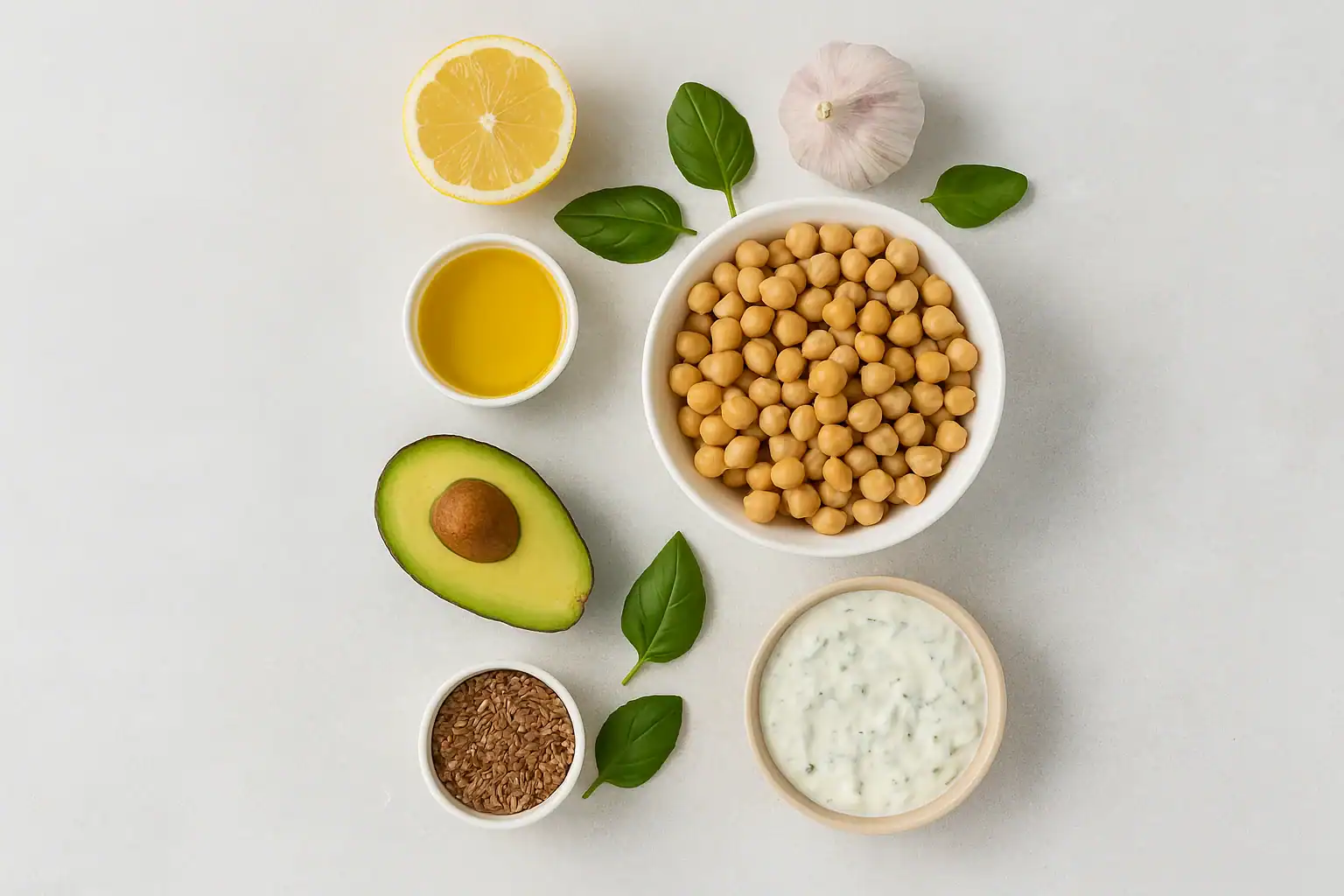
Some Mediterranean meals feel complete long before they become complicated. A spoonful of yogurt beside warm vegetables, lemon over beans, herbs over grains, olive oil on tomatoes, or a few toasted nuts over fruit can change the whole feeling of a plate.
The secret is not one perfect ingredient. It is the way familiar foods work together. A simple Mediterranean plate usually has contrast: something steady, something fresh, something bright, something creamy, something rich, something herbal, and sometimes something crunchy.
You do not need all of these every time. But once you understand the pattern, everyday meals become easier to build.
Simple Mediterranean plates work because each ingredient has a job
A plate can look simple and still feel generous.
Beans give weight. Greens bring freshness. Lemon wakes up quiet food. Yogurt softens strong flavors. Olive oil ties everything together. Herbs make the plate smell alive. Nuts, seeds, raw vegetables, or toasted bread add texture.
This is why a small meal can still feel satisfying. It does not rely on heaviness. It relies on balance.
Start with Something Steady
Most simple Mediterranean plates begin with something that gives the meal structure.
That might be chickpeas, lentils, white beans, fava beans, barley, farro, bulgur, potatoes, eggs, bread, fish, or a small portion of rice. These foods make the plate feel like a meal instead of a snack.
Beans are especially useful because they can move in many directions. White beans with olive oil and herbs can feel soft and simple. Chickpeas can become a salad with cucumber and tomato. Lentils can sit under roasted vegetables or become a warm soup.
For a fuller example, Mediterranean Lentil Soup shows how a humble ingredient can become a complete meal without needing much decoration.
Add Something Fresh
Freshness is what keeps a Mediterranean plate from feeling flat.
Tomatoes, cucumbers, greens, fennel, peppers, zucchini, arugula, cabbage, parsley, mint, basil, dill, or a small salad can change the whole plate. Even a handful of raw greens beside warm food can make the meal feel more alive.
Freshness does not always mean raw. Grilled zucchini, roasted peppers, sautéed greens, or tomatoes warmed in olive oil can still bring that lighter edge.
The point is simple: add something that makes the plate feel awake.
Use Lemon or Citrus for Brightness
Many simple meals need brightness more than they need another sauce.
Lemon juice can lift beans, greens, fish, chicken, lentils, roasted vegetables, yogurt sauces and salads. Orange works beautifully with fennel, olives, herbs, nuts, yogurt and simple desserts.
This is why citrus appears so often in Mediterranean cooking. It does not need to be treated like a health trick or a special ingredient. It simply makes food taste cleaner and more complete.
For a fresh example, Sicilian Citrus & Fennel Salad shows how citrus and crunch can make a small plate feel vivid.
Bring in Something Creamy
Creaminess does not have to mean heaviness.
Plain yogurt, ricotta, labneh, feta, soft cheese, hummus, tahini, or a simple bean spread can soften a plate and make it feel more rounded. A spoonful of yogurt beside roasted vegetables can do more than a complicated sauce. Ricotta with honey and nuts can become dessert. Hummus can turn raw vegetables and bread into a real lunch.
The useful thing about creamy ingredients is contrast. They sit well beside lemon, herbs, garlic, cucumbers, tomatoes, roasted vegetables and warm grains.
A simple plate often needs only one creamy element.
Let Olive Oil Tie the Plate Together
Extra virgin olive oil is often the quiet link between everything else.
It helps tomatoes feel fuller, greens feel softer, beans feel richer, bread feel more generous, and vegetables feel finished. It also carries herbs, garlic, lemon and spices across the plate.
You do not need to drown the food in oil. A small drizzle over warm beans, sliced tomatoes, roasted vegetables, grilled fish or bread can be enough.
For choosing and using it well, our Olive Oil 101 guide is the better place to go deeper.
Add Herbs for Scent and Freshness
Herbs make simple food feel intentional.
Parsley over beans, mint in yogurt, basil with tomatoes, dill with cucumber, oregano with roasted vegetables, rosemary with potatoes, and thyme with fish or chicken can all change the mood of a plate.
Herbs are useful because they add flavor without making the meal heavier. They also make everyday food feel more seasonal and less repetitive.
A plate of beans with olive oil is good. Beans with olive oil, lemon and parsley feel complete.
Finish with Crunch
Crunch is easy to forget, but it often makes the difference.
Toasted almonds, walnuts, pistachios, sesame seeds, pumpkin seeds, raw fennel, cucumber, radish, cabbage, crisp bread, or a few olives can bring texture to soft foods.
This matters most when the plate has yogurt, beans, grains, cooked vegetables or soft cheese. A little crunch keeps the meal from becoming too quiet.
You do not need much. A small handful of nuts, a few seeds, or a crisp vegetable on the side can be enough.
What a Balanced Mediterranean Plate Can Look Like
A simple lunch might be white beans with olive oil, lemon, parsley, cucumber and bread.
A warm dinner might be roasted vegetables with yogurt sauce, herbs, lentils and toasted nuts.
A small plate might be tomatoes, feta, olives, oregano, olive oil and bread.
A light dessert might be yogurt with fruit, honey and almonds.
None of these plates needs a strict formula. They simply repeat the same useful idea: steady base, fresh contrast, brightness, richness, texture and enough flavor to make the meal feel finished.
Keep the Pattern Flexible
The best Mediterranean plates are not built from rules. They are built from familiar ingredients that can move around.
If the meal feels too plain, add lemon or herbs.
If it feels too sharp, add yogurt, cheese, beans or bread.
If it feels too soft, add nuts, seeds, raw vegetables or toasted bread.
If it feels too heavy, add greens, tomatoes, cucumber, citrus or fresh herbs.
If it feels incomplete, add olive oil and something steady underneath.
This is a practical way to cook because it works with what you already have. You are not chasing a perfect recipe. You are learning how a plate comes together.
This flexible way of building meals sits close to the traditional Mediterranean food pattern, where vegetables, grains, legumes, fruit, herbs, nuts and olive oil appear as everyday foundations.
Final Takeaway
Simple Mediterranean plates are not about eating perfectly or following a special plan.
They are about balance. A few ordinary ingredients can feel generous when they each do something useful: beans or grains for structure, vegetables for freshness, lemon for brightness, yogurt or cheese for softness, olive oil for richness, herbs for scent and something crunchy to finish.
That is why the simplest Mediterranean meals often stay with you. They do not try too hard. They just know how to come together.