
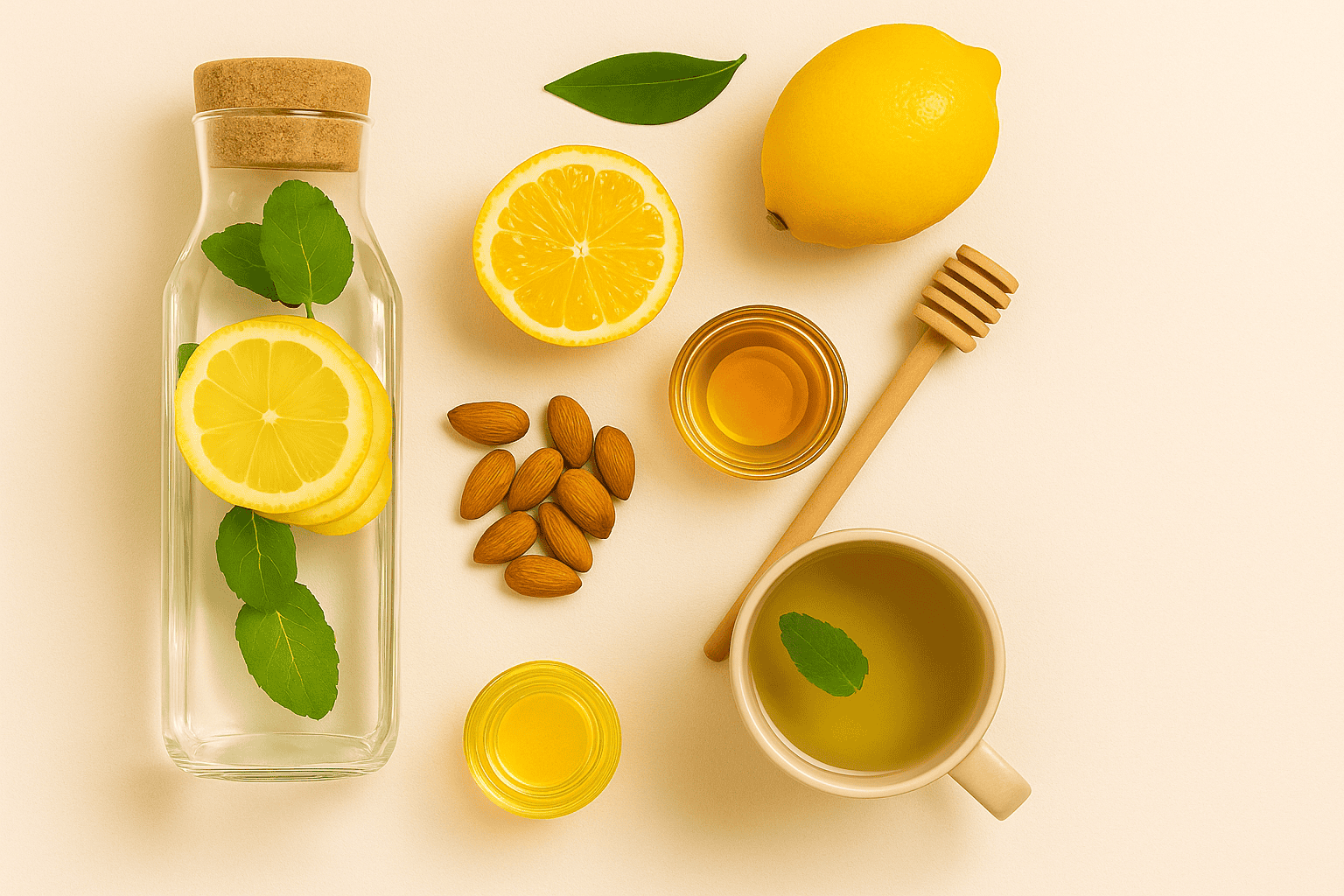
Mediterranean water habits are not about strict goals or complicated systems.They are small daily habits that make drinking and eating for freshness feel natural, especially when the day is warm.
A glass of water on the table, fruit in a bowl, mint near the kitchen, a pitcher in the fridge, herbal tea in the afternoon, or cucumber and tomatoes with lunch can all become part of the same rhythm.
The point is not to force hydration. It is to make it easier, more pleasant, and more connected to ordinary life.
Keep Water Where You Can See It
The simplest hydration ritual is keeping water visible.
A glass on the table, a carafe near the kitchen, a bottle by the door, or a small pitcher in the fridge can remind you to drink without turning it into a task.
In many Mediterranean homes, water belongs naturally to the table. It sits beside meals, bread, fruit, vegetables, and conversation. That quiet presence is often more useful than trying to remember later.
Start the Day Simply
A morning glass of water can be enough.
It does not need to become a strict lemon-water routine or a special health habit. Plain water, cool water, room-temperature water, or water with a slice of lemon or orange can all work.
The important part is that the day begins with something simple before coffee, errands, screens, and noise take over.
For a broader look at this slower start, our Mediterranean morning routine follows the same feeling through light, air, breakfast, and small quiet habits.
Use Fruit and Vegetables for Freshness
Hydration is not only about what you drink.
Cucumbers, tomatoes, watermelon, oranges, peaches, grapes, zucchini, leafy greens, and soups all bring freshness to the table. This is one reason Mediterranean food often feels easier in warm weather.
A plate of tomatoes and cucumber, fruit after lunch, or a bowl of soup with vegetables can support the day without needing anything complicated.
For a simple example, our Mediterranean summer salad brings together cucumbers, tomatoes, herbs, olives, feta, lemon, and olive oil in a way that fits naturally into warm days.
Make Water More Inviting
Sometimes plain water becomes easier to drink when it feels a little more inviting.
Add mint, basil, cucumber, lemon, orange peel, or a few berries to a pitcher. Keep it cold if the day is hot, or leave it room temperature if that feels better.
This is not about making a fancy drink. It is about making water something you want to return to.
Let Herbal Tea Have a Place
Herbal tea can be part of hydration without becoming a cure or a promise.
Mint, chamomile, sage, rosemary, lemon balm, and mountain tea can fit into different parts of the day. Warm tea can feel calm in the evening, while cooled herbal tea can feel refreshing in warmer weather.
The value is often in the pause: a cup, a chair, a few quiet minutes, and something simple to drink.
For the more general version of this subject, our guide to hydration the Mediterranean way looks at water, herbal tea, and timing as part of daily rhythm.
Notice the Hot Parts of the Day
Warm Mediterranean days often have their own rhythm.
Morning may feel easier for errands or walking. Midday can be slower, with shade, lighter meals, and water nearby. Evening may bring cooler air, a lighter drink, or a simple meal outside.
Hydration fits better when you notice the day itself. Keep water close before a walk, after returning home, during lunch, and when the room feels warm.
It does not need to be measured perfectly. It only needs to be remembered gently.
Keep the Evening Light
Evening hydration is usually better when it stays simple.
A glass of water with dinner, herbal tea after the meal, fruit in small amounts, or a warm drink before the night quiets down can all fit naturally.
Avoid making the evening feel heavy with too much food, too much sugar, or too many drinks late at night. A lighter rhythm is often easier to keep.
Our Mediterranean evening routine continues this same idea through dinner, warm light, quiet rooms, and small repeatable habits.
A Simple Hydration Rhythm
Mediterranean hydration rituals work best when they feel ordinary.
Keep water visible. Add herbs or citrus when it helps. Eat fruit and vegetables often. Use herbal tea as a pause. Notice the warm parts of the day. Let the evening stay lighter.
These habits do not need to promise energy, glow, or perfect digestion. They only need to make daily hydration feel easier, fresher, and more natural.
That is enough.