
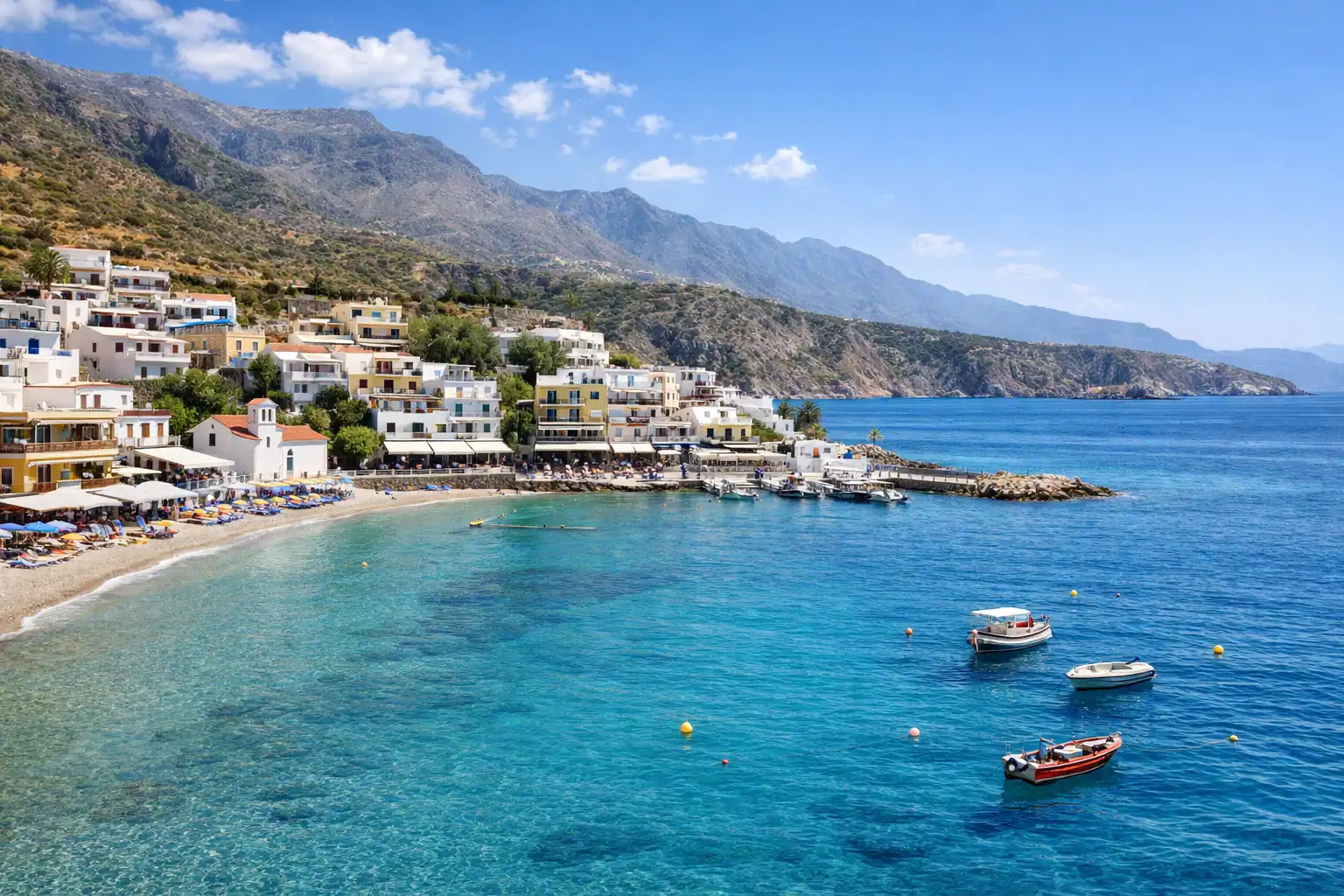
Crete in April weather sits between a mild Mediterranean spring and the first hints of summer. The island is green after the winter rains, wildflowers brighten rural areas and the intense heat of July and August is still far away.
April can be an excellent month for Crete if the trip is built around old towns, villages, archaeological sites, food, walking and coastal scenery. It is less predictable if the entire holiday depends on warm-water swimming and long beach days.
What I like about Crete in April is that the island already feels open and active, but the weather still encourages you to explore rather than organize every day around escaping the heat.
Crete in April Weather: The Quick Answer
April is generally mild, but Crete is a large and mountainous island, so one temperature cannot describe every part of it.
Official tourism information from Greece describes spring in Crete as mild and increasingly warm, with average daytime highs rising from about 17°C in March to almost 24°C in May. April sits between those two points, so conditions can vary noticeably through the month.
You can read more in the Visit Greece guide to spring travel in Greece.
These are broad seasonal averages, not a forecast for a specific trip. A bright afternoon can feel considerably warmer in direct sun, while a windy evening or a day in the mountains can feel much cooler.
For April, I would plan around pleasant spring weather and treat genuinely warm beach days as a bonus rather than a guarantee.
Early April and Late April Can Feel Different
April is a transition month. During the first part of the month, cooler evenings, wind and occasional rain still belong in the plan. As the month progresses, longer bright periods become more likely and coastal afternoons can begin to feel closer to early summer.
That does not make late April a guaranteed beach holiday. It simply means you may have more opportunities to sit outside, walk comfortably along the coast and spend part of the afternoon near the sea.
If your dates are flexible and warmth matters, I would choose the second half of April while still packing for changeable spring weather.
Is Crete Warm Enough for Swimming in April?
Swimming is possible in April, but the sea is still cool compared with late spring and summer.
Some travelers will happily swim on a calm sunny afternoon. Others may find the water too fresh for more than a quick dip. Wind, cloud cover and the shape of the bay can also make the same coastline feel very different from one day to the next.
I would bring a swimsuit, but I would not choose April expecting several hours in warm water every day.
The best approach is to let swimming remain optional. If a sheltered beach feels inviting, enjoy it. If the water feels too cold, Crete gives you enough to do that the day does not suddenly become a disappointment.
Our Mediterranean spring travel guide looks at this wider shoulder-season trade-off across the region, where swimming may be possible without needing to carry the whole trip.
Weather Can Change Across the Island
Crete is long, mountainous and exposed to different winds, so weather can vary between regions and even between the coast and nearby inland areas.
A bright day in one part of the island does not guarantee identical conditions everywhere else. Mountain areas can feel much cooler than coastal towns, and wind can change how comfortable a beach or waterfront feels.
That is why I would avoid choosing a base only because one side of the island is supposed to be “warmer.” The better decision is to choose the area that fits the kind of trip you want, then check the local forecast as the date approaches.
Chania Works Well for a First April Trip
Chania is one of the easiest bases if you want the trip to remain interesting whatever the weather does.
The old town and Venetian harbor give you somewhere to walk, eat and spend time even when the beach is not the main event. Western Crete also gives you access to villages and varied landscapes without needing every day to become a long cross-island journey.
April suits Chania particularly well because walking is still comfortable for much of the day. You can explore the old town in the morning, stop for lunch and continue later without structuring everything around extreme heat.
Rethymno Is a Good Alternative if You Want More Balance
Rethymno feels smaller and more compact than Chania while still giving you an old town, a waterfront and enough restaurants and daily life for several nights.
Its position between Chania and Heraklion can also be useful if you want selected excursions in both directions rather than concentrating only on western Crete.
If you are deciding between the two and transport matters, our Chania or Rethymno without a car guide compares the bases in more detail.
In April, I would value the town itself highly. A base should still work on the day when wind or rain changes the original plan.
Heraklion Makes Sense for History and Practical Connections
Heraklion is not always the first place travelers imagine when planning a relaxed Crete trip, but it can be a very practical April base.
Knossos is nearby, the archaeological museum adds a strong indoor option and the city has enough everyday life that the season matters less than it does in a small beach resort.
It also works well for a shorter trip when you want to reduce transfer time and place archaeology, food and city life ahead of having a postcard beach outside the door.
Agios Nikolaos Gives You an Eastern Crete Base
Agios Nikolaos offers another type of April trip. The town sits directly on the coast but has enough life of its own to work before peak summer.
The lake, waterfront and surrounding eastern Crete landscape make it a good choice for travelers who want coastal atmosphere without depending entirely on beach weather.
It can also serve as a base for exploring the eastern side of the island rather than spending much of the trip driving back and forth from western Crete.
South-Coast Villages Feel Different in Spring
Places such as Paleochora, Matala and Loutro show another side of Crete.
They can feel slower and more directly connected to the landscape than the larger northern cities. Spring emphasizes that atmosphere because visitor numbers are lower and the surrounding hills are greener.
But April also requires more flexibility in smaller seasonal destinations. Some restaurants, transport links and tourism services may operate differently from peak summer, so it is worth checking the practical details for your exact dates.
That is not necessarily a disadvantage. It simply means choosing a south-coast village because you want the quieter rhythm, not because you expect the full July resort experience without the crowds.
Crete Is Especially Green in Spring
Many travelers know Crete through summer photographs, when the landscape has already moved toward dry gold and brown tones.
Spring looks different. Winter rains leave the landscape greener, while wildflowers and new growth bring color back to rural areas before the dry summer season.
Villages, olive groves, mountain slopes and inland roads become more than the space between beaches. They can be some of the most memorable parts of an April road trip.
April Is Better for Walking Than High Summer
One of the biggest advantages of April is that you can use more of the day for walking and sightseeing.
In midsummer, exposed archaeological sites, old-town streets and open landscapes can become uncomfortable around the hottest hours. April usually gives you much more flexibility.
You can walk through Chania or Rethymno, visit ruins, stop in a village and still have enough energy for another short walk later.
The trade-off is less predictable weather. Bring a layer and accept that one day may be warm and bright while the next feels unmistakably like spring.
Mountain Weather Can Be Much Cooler
Crete is not just coastline. The island’s mountainous interior means a warm afternoon near the sea does not tell you what higher elevations will feel like.
If you are driving toward mountain villages or planning a hike, check the local forecast rather than relying on the temperature at your coastal base.
The contrast between coast and mountains is part of what makes spring on Crete interesting, but it also makes layers more useful than packing for one fixed temperature.
What to Pack for Crete in April
I would pack for several versions of spring rather than for one imagined forecast.
- light clothing for sunny afternoons;
- a sweater or light fleece;
- a light waterproof or wind-resistant jacket;
- comfortable walking shoes;
- swimwear;
- sunglasses and sun protection;
- a slightly warmer layer if you plan to visit mountain areas.
Do not leave sun protection at home just because it is April. Bright Mediterranean spring days can feel strong even when the air temperature is comfortable.
Do You Need a Car in Crete in April?
A car becomes particularly useful if villages and landscapes are a major reason for the trip.
Crete is large. Trying to combine Chania, Heraklion, southern villages and eastern Crete from one base can quickly turn a relaxed spring holiday into a driving schedule.
I would choose one region first and use the car to explore around it.
If you prefer not to drive, choose a base that already gives you enough on foot and use buses or selected excursions rather than trying to reproduce an island-wide road trip through public transport.
What April Is Not Ideal For
Crete in April is not the month I would choose for:
- a guaranteed hot beach holiday;
- very warm sea swimming every day;
- a trip built entirely around seasonal beach services;
- assuming every summer transport link or tourism service already runs at peak frequency.
If those are the priorities, moving the trip toward late May or June makes planning considerably easier.
What April Is Particularly Good For
April becomes much more attractive when the priorities are different:
- green landscapes and spring flowers;
- walking through old towns without extreme heat;
- archaeological sites and cultural stops;
- village drives;
- long lunches and quieter evenings;
- coastal scenery without needing every day to become a beach day;
- a flexible itinerary before peak-summer crowds.
That is the version of Crete I would travel for in April.
Where to Stay in Crete in April
For a first spring visit, I would prioritize a base that works even on a cooler or windy day.
- Chania: best for old-town atmosphere and western Crete;
- Rethymno: compact, walkable and well positioned for selected excursions;
- Heraklion: practical for archaeology, city life and shorter trips;
- Agios Nikolaos: a coastal town base for eastern Crete;
- Paleochora or another south-coast town: better when a quieter rhythm matters more than maximum convenience.
This post contains an affiliate accommodation link. If you book through it, I may earn a commission at no extra cost to you.
Once you have chosen the part of the island that fits your trip, you can compare places to stay across Crete on Booking. I would use the map first and check how far the property really is from the old town, coast, bus station or road you expect to use most.
Is Crete Worth Visiting in April?
Yes — if you want Crete itself rather than only a summer beach holiday.
The sea is still cool, some days will feel more like spring than summer and you should not build the entire itinerary around swimming.
In return, April gives you greener landscapes, comfortable conditions for many outdoor activities, quieter island life and more freedom to explore places that can feel very different during peak summer.
For me, the best April trip would use one good base, leave space for weather changes and combine towns, villages, food, archaeological sites and coast rather than trying to chase the warmest beach every day.
Crete in April weather is not perfectly predictable, and that is exactly why the itinerary should remain flexible. Bring layers and a swimsuit, check the forecast as the trip approaches and let the island decide which version of spring you get.