
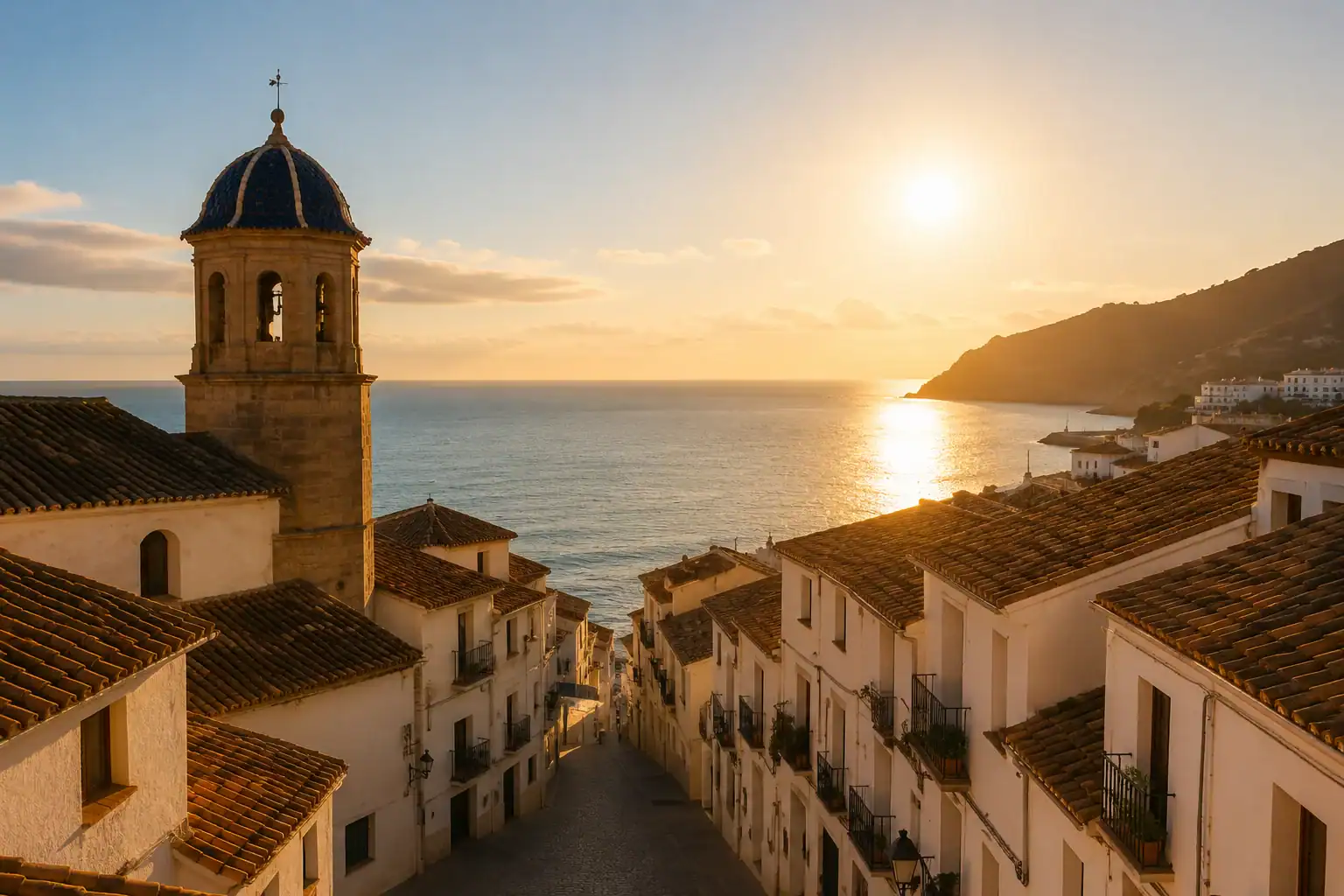
Mediterranean off-season sun is not the same as a summer beach holiday. That is the first thing to know before choosing where to go.
In winter, the best Mediterranean places are often about light, not heat. You may get a warm lunch outside, a long walk by the sea, a quiet museum visit, a market full of citrus, or an old town that finally feels easy to move through. You may also get rain, wind, short days and evenings that need a jacket.
That does not make winter a bad time to travel. It just changes what you should look for.
A good off-season destination should still feel open in winter. Cafés should be working. Streets should have local life. There should be enough sun for walking, enough food culture for slow meals, and enough shelter for the days when the weather turns.
Here are seven Mediterranean places that still make sense in winter, depending on what kind of brightness you want.
Best Picks at a Glance
For the easiest city break, choose Valencia or Athens. For the warmest island feeling, look at Cyprus or Malta. For food, markets and winter atmosphere, Sicily is hard to beat. For southern Spanish light without summer crowds, Seville and Málaga both work well, but in different ways.
If your idea of winter sun means swimming every day, you may need to look further south or wait for late spring. But if you want outdoor days, lighter streets and a break from grey weather, the Mediterranean still has plenty to offer.
1. Valencia, Spain
Valencia is one of the easiest Mediterranean winter choices because it gives you city comfort and sea light in the same trip.
The city does not need to be hot to work well. In winter, you can walk through the Turia Gardens, visit the Central Market, sit outside for lunch on a sunny day and still reach the beach without turning the whole trip into a beach holiday.
Valencia is best when you want a simple winter city break: food, light, walking, markets, orange trees and enough local life to avoid that closed-resort feeling.
What works well in winter:
- walking or cycling through the Turia Gardens
- visiting the Central Market in the morning
- eating rice dishes or seafood at lunch, not late at night when it gets colder
- taking a slow beach walk at Malvarrosa
- using the city as a calm base instead of trying to “do everything”
The mistake is expecting Valencia to feel tropical. It will not. But it often feels bright, open and easy, which is exactly what many winter trips need.
For a slower city route, you can also read Valencia in One Day Without Rushing Too Much.
2. Malta
Malta is a strong winter choice because it stays active outside the summer season. Valletta, Sliema, Mdina and the coastal paths still give you things to do when the weather is mild but not beach-hot.
The island is small, so you can change plans without losing a whole day. If the coast is windy, you can go into Valletta. If the sun comes out, you can walk near the water. If you want history, Mdina and the Three Cities are easier to enjoy without summer crowds.
Malta works best for people who want winter sun with structure: short distances, historic streets, sea views, cafés, churches, stone balconies and a lot of visual warmth even when the air is cool.
What works well in winter:
- Valletta in the afternoon sun
- Mdina without heavy crowds
- coastal walks when the wind is calm
- ferry views between Valletta and the Three Cities
- simple lunches outdoors on clear days
The caution: Malta can be windy in winter, and some beach-style expectations will disappoint you. Go for light, stone streets, sea views and walking, not for a guaranteed sunbed holiday.
For a deeper winter angle, use Malta in Winter.
3. Seville, Spain
Seville is not on the coast, but it belongs in this list because it gives one of the strongest southern Spanish winter city experiences.
In summer, Seville can be too hot for long walks. In winter, it becomes much easier. You can visit the Alcázar, walk through Santa Cruz, sit outside for tapas, cross Plaza de España slowly and enjoy the orange trees without planning your whole day around shade.
Seville is best for people who want warmth, food and architecture more than sea views.
What works well in winter:
- tapas outside at lunch
- long walks through the old center
- Plaza de España without summer heat
- Real Alcázar with more comfortable timing
- evenings that still feel alive, even if you need a jacket
The caution: winter evenings can be cool, and Seville is not a beach destination. Choose it for light, food and city life, not for coastal scenery.
If you are comparing southern Spanish cities, Southern Spain in Spring also gives a useful wider view, even though spring feels different from winter.
4. Cyprus
Cyprus is one of the better choices when you want the warmest Mediterranean feeling without leaving Europe’s winter completely behind.
The island gives you ancient sites, harbors, beaches, cafés, coastal roads and mountain villages. Around Paphos, Limassol and Larnaca, winter can still feel bright enough for long outdoor days, especially when the sun is out.
Cyprus works best for travelers who want a mix of coast, ruins and real warmth, not just a pretty city break.
What works well in winter:
- Paphos harbor and archaeological sites
- coastal walks without summer heat
- café stops in Larnaca or Limassol
- easy drives between beaches, villages and ruins
- a mountain day in the Troodos area if you want contrast
The caution: Cyprus is larger than it looks on a map. If you want quiet beaches, ruins and villages in one trip, a car helps a lot. Also, winter can bring rain, so it is better to plan flexible days rather than a strict beach schedule.
For a focused island guide, read Cyprus Winter Mini Guide.
5. Athens, Greece
Athens is a winter sun destination for people who want culture without the summer struggle.
The Acropolis is easier to visit. Streets are less exhausting. Cafés stay full. Food feels better suited to the season: soups, baked dishes, warm pies, grilled meat, lemony plates, coffee stops and long lunches.
Athens also gives you winter light in a very practical way. You can spend the morning around ancient sites, take a slow lunch, walk through Plaka or Koukaki, and still climb Lycabettus Hill or Filopappou Hill if the day is clear.
What works well in winter:
- Acropolis visits with fewer crowds
- museum time on rainy days
- warm Greek food after long walks
- coffee stops in local neighborhoods
- sunset viewpoints without summer heat
The caution: Athens can feel colder than people expect when the wind comes through the streets or when you are in the shade. Pack for layers, not for a beach holiday.
For a compact route, use Athens in 24 Hours.
6. Sicily, Italy
Sicily is not always the warmest choice, but it is one of the most rewarding off-season Mediterranean places if you care about food, markets and atmosphere.
Winter gives Sicily a different rhythm. Palermo’s markets still have energy. Citrus is everywhere. Coastal towns feel more local. Ancient sites are easier to visit. You can walk more, eat better and notice details that summer heat often hides.
Sicily works best if you want a trip built around food, old streets, coastlines, churches, markets and slower movement.
What works well in winter:
- Palermo street food and markets
- citrus season
- coastal walks on clear days
- old towns without summer crowds
- archaeological sites with easier temperatures
The caution: Sicily can be rainy and rough around the edges in winter. Some smaller beach places may feel too quiet. Choose a city base like Palermo, Catania or Syracuse if you want restaurants, transport and local life around you.
If you want the coast but prefer a smaller-town stay, our off-season seaside towns in Southern Italy guide compares Monopoli, Otranto, Scilla, Maratea and Syracuse by local life, transport, winter atmosphere and how quiet each place becomes outside summer.
For a city-focused starting point, read Palermo in 24 Hours.
7. Málaga and the Costa del Sol, Spain
Málaga is one of the most practical choices for winter sun because it combines a real city, an airport, museums, food, beach walks and easy day trips.
It is not the same as a small white village or a remote island. That is part of the advantage. In winter, you often want a place that still functions well. Málaga gives you that: cafés, markets, galleries, seaside promenades, old streets and enough local movement to keep the trip from feeling empty.
Málaga works best if you want Mediterranean light with low effort.
What works well in winter:
- walking the waterfront without summer heat
- visiting the market in the morning
- eating seafood or tapas at lunch
- using the city as a base for short trips
- mixing museums with outdoor time
The caution: the Costa del Sol is still seasonal in some beach areas. Málaga itself is safer as a winter base than a resort town that may feel quiet outside summer.
For a short city plan, use Malaga in 24 Hours.
How to Choose the Right Winter Sun Destination
The best choice depends less on the highest temperature and more on what you want your days to look like.
Choose Valencia if you want an easy city break with parks, markets and a beach walk.
Choose Malta if you want sea views, history and compact distances.
Choose Seville if you want warm southern city energy without needing the coast.
Choose Cyprus if you want one of the warmest Mediterranean island options.
Choose Athens if you want culture, food and big sights with fewer crowds.
Choose Sicily if you want markets, old streets, citrus season and strong local food.
Choose Málaga if you want the simplest winter-sun base with city comfort and coastal light.
If you are choosing specifically between islands, this Mediterranean Islands in Winter guide compares Cyprus, Malta, Sicily, Mallorca, Crete and Sardinia by travel style, not just by temperature.
For a wider comparison beyond the Mediterranean, Lonely Planet’s winter sun guide to Europe can also help you compare nearby winter-sun options before deciding.
What Winter Sun Really Means Here
A Mediterranean winter trip works best when you leave space in the plan.
Do the outdoor walk when the sun is out. Keep museums or cafés for cloudy hours. Eat the main meal at lunch if the afternoon feels warm. Pack layers. Do not book the trip around swimming unless you are choosing the warmest islands and you are comfortable with cold water.
The reward is not a fake version of summer.
It is a quieter kind of travel: bright mornings, easier streets, food that feels seasonal, locals still using the city, and enough sun to make winter feel less closed in.
That is where Mediterranean off-season sun is at its best.