
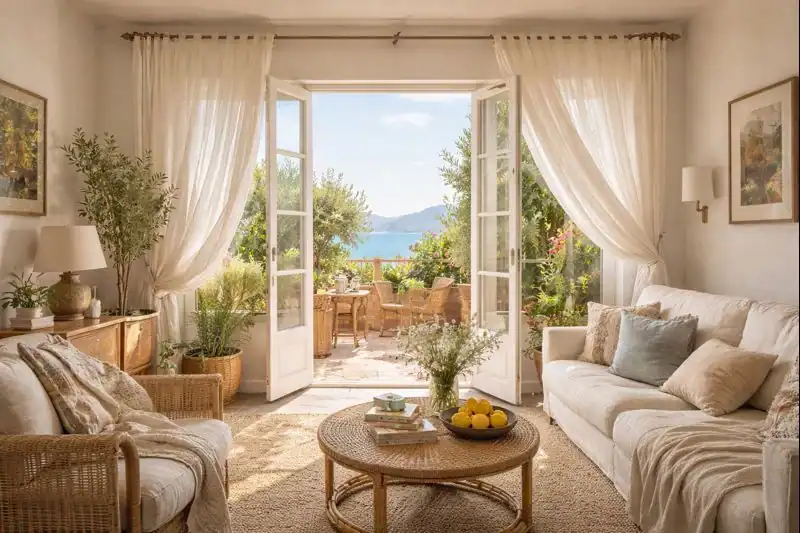
In many Mediterranean homes, windows are rarely closed without reason. Living with open windows allows air, sound, and light to move naturally through the house, connecting interior spaces with the outside world in subtle, everyday ways.
Living with open windows as a way of life
Living with open windows is not a design choice made for aesthetics alone. It responds to climate, rhythm, and habit. Morning air replaces the cool of the night, curtains shift gently, and rooms feel awake before the day fully begins.
Rather than sealing interiors from their surroundings, Mediterranean homes tend to stay porous. Sounds drift in — footsteps, distant voices, birds — becoming part of the home’s atmosphere rather than interruptions.
How air shapes Mediterranean interiors
Air circulation is central to how Mediterranean homes function. Open windows allow rooms to cool naturally, reducing the need for mechanical comfort. Cross-breezes pass through hallways, living rooms, and balconies, keeping spaces breathable and light.
This constant movement of air influences how interiors are arranged. Furniture stays simple, fabrics remain lightweight, and heavy barriers are avoided. Living with open windows encourages homes to feel flexible rather than fixed.
Sound as part of domestic calm
Mediterranean calm is rarely silent. Living with open windows means accepting sound as a background presence — a distant church bell, café chatter, or the hum of everyday life.
Instead of disrupting rest, these sounds often reinforce a sense of place. They remind residents that home exists within a living neighborhood, not apart from it. Calm comes from familiarity, not isolation.
Light, movement, and everyday comfort
Natural light enters freely when windows stay open. It changes throughout the day, soft in the morning and warmer by afternoon, shaping how rooms are used and experienced.
Living with open windows supports a slower pace indoors. Time feels less segmented, and daily activities follow the light rather than strict schedules. This approach reflects the broader Mediterranean attitude toward home as a space meant to breathe.
Homes that embrace open windows often share the same quiet logic found in other Mediterranean rituals, from early walks through old towns to evenings shaped by gentle transitions rather than sharp endings, as explored in Old Town Morning Walks — How Mediterranean Cities Wake Up Slowly. Architectural traditions across the region have long supported this openness, balancing indoor comfort with climate-responsive design, a principle widely documented in studies of Mediterranean vernacular housing.
Carrying openness beyond the walls
Living with open windows is not limited to geography. It reflects an approach to daily life that values flow over control and connection over separation.
Mediterranean homes show that calm does not require silence or enclosure. Sometimes, it comes from letting air move freely, sounds pass gently, and light define the day on its own terms.
Living with open windows reminds us that a home does not need to shut the world out to feel peaceful. In Mediterranean interiors, openness becomes a quiet form of balance — one shaped by climate, habit, and an unhurried relationship with everyday life.