

Some starters don’t announce themselves with size or spectacle. They arrive quietly, placed between hands and conversations, meant to be taken slowly. Marinated olives with citrus peel belong to this category — a small Mediterranean beginning that sets the tone rather than steals the scene.
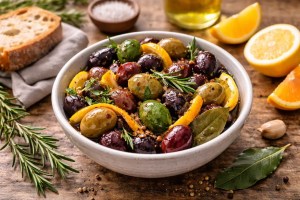
Marinated Olives with Citrus Peel
This kind of starter feels rooted in everyday Mediterranean rhythms. Olives are rarely treated as a standalone “recipe” — they are opened, set out, dressed lightly, and allowed to sit on the table while people arrive, greet one another, and settle into the moment. The citrus peel brings a gentle lift, cutting through the richness of the oil and giving the plate a subtle brightness without making it sharp.
What makes this small plate work is its restraint. There’s no rush to build layers of flavor; the olives keep their identity, the citrus stays aromatic rather than dominant, and the herbs remain in the background. The result is a starter that doesn’t compete with what follows. It simply opens the appetite and eases the transition from outside noise into shared space.
On Mediterranean tables, these bowls often appear early and linger. They’re reached for while bread is torn, while water is poured, while the first conversations find their rhythm. The starter stays on the table without needing to become the main event.
If you enjoy this kind of gentle opening to a meal, you might also like Local Bakery Runs — Morning Pastries Across the Mediterranean on our site, which explores how small, everyday food rituals shape the tone of a day. You might also like this earlier piece on marinated olives at Mediterranean tables, where the focus is more on the everyday rhythm of how olives are shared, passed around, and quietly become part of the table.
For a broader cultural lens on why olives are such a constant presence in Mediterranean life, the Mediterranean Diet Foundation offers a helpful overview of how olives and olive oil anchor daily eating traditions.
This small starter doesn’t aim to impress. It aims to belong — quietly present, easy to share, and perfectly in place at the beginning of a Mediterranean table.