
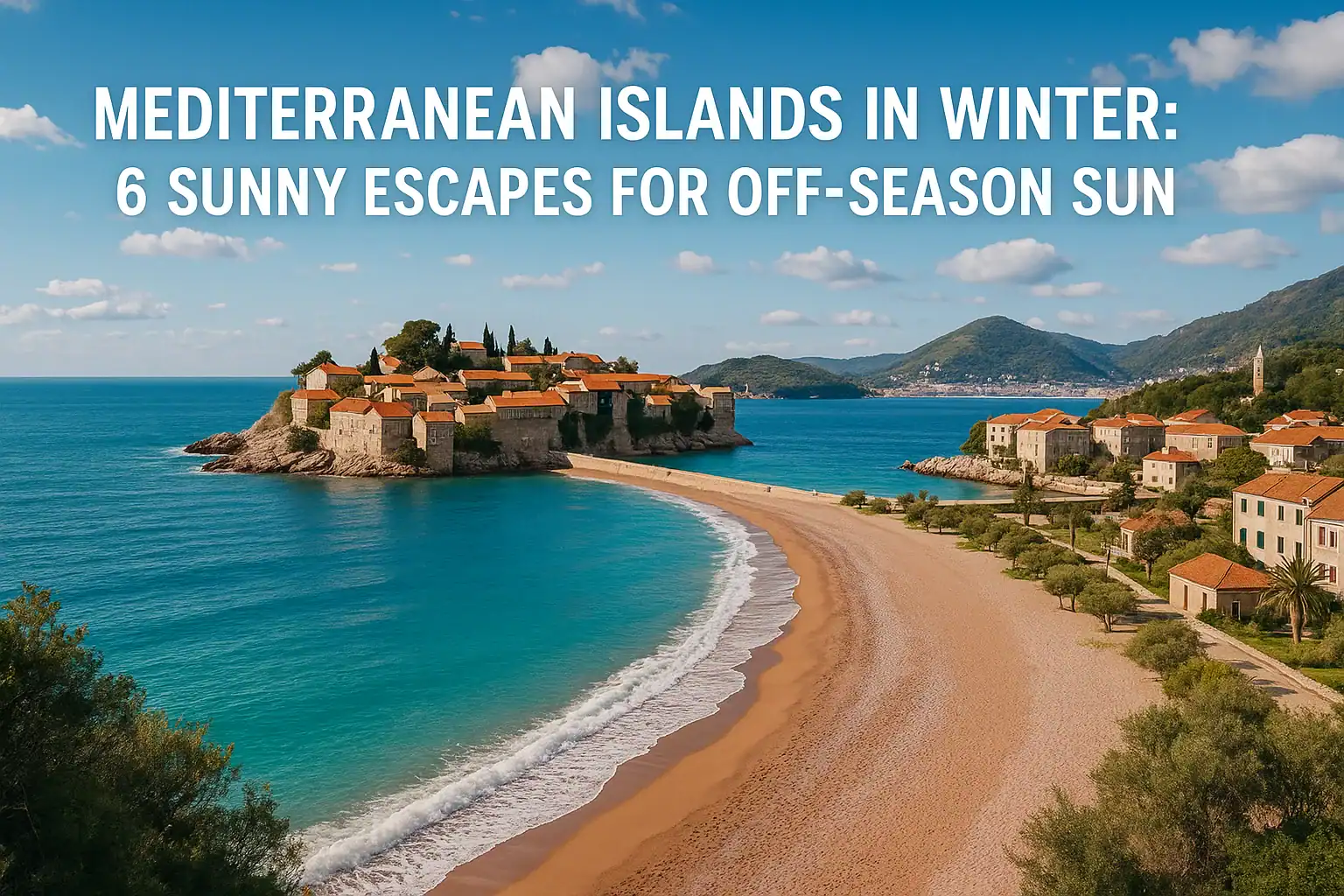
Mediterranean Islands in Winter: 6 Sunny Escapes for Off-Season Sun
If winter feels too long, too grey, or too cold, the Mediterranean has a quiet secret: several islands stay surprisingly warm and sunny even in the off-season, offering beach walks, open-air cafés, citrus groves, and gentle temperatures that rarely drop below 15–18°C.
Before choosing where to travel, you can check average temperatures for each destination on Climates to Travel — it’s a helpful tool to compare weather in Cyprus, Malta, Sicily and Crete, month-by-month.
Winter is also the perfect time to enjoy the Mediterranean’s slow pace — warm light, calm mornings, simple pleasures, and quieter roads. And if you prefer to travel outside peak season, the empty beaches and lower accommodation prices make winter escapes even more appealing.
Before planning your trip, here is what makes Mediterranean winters so unique — and how to choose the island that fits your travel style best.
Is the Mediterranean Warm in Winter? 🌡️
Yes — most Mediterranean islands stay surprisingly mild between 15–20°C in December, January, and February. Even when continental Europe freezes, the Med remains open for long seaside walks, cozy cafés, and quiet photography moments.
Below is a quick climate snapshot to help you choose based on what you want — warmth, culture, or slow-season bliss.
| Island | Avg. Temperature (°C) | Best Winter Month | Rain Level | Best For |
|---|---|---|---|---|
| Cyprus | 18–20°C | January | Low | Beach walks, citrus groves, Paphos old town |
| Crete | 15–18°C | February | Medium | Olive-harvest culture, food, sea-to-mountain landscapes |
| Malta | 16–18°C | December | Low | Valletta streets, Gozo cliffs, historic forts |
| Mallorca | 14–17°C | January | Medium | Coastal photography, cafés by the sea, quiet bays |
| Sicily | 15–18°C | February | Medium | Seafood, street markets, warm afternoons in ancient cities |
| Sardinia | 13–16°C | January | Low | Turquoise water views, peaceful coastal trails |
Travel tip: book weekday flights — winter tickets to Cyprus, Malta & Sicily are often 30–45% cheaper than summer.
1. Cyprus — The Warmest Winter in the Mediterranean
With sunny days reaching 18–20°C and blue-sky coastlines, Cyprus is one of the best winter escape destinations.
Walk along Paphos’ waterfront, explore ancient ruins without crowds, or enjoy fresh citrus at local markets.
How to get there: direct low-season flights from London, Rome, Berlin.
Budget: €35–€60/night guesthouses | €12–€18 meals | buses €1–€3.
Why go in winter: mild weather, scenic sea walks, relaxed cafés, excellent accommodation value.
2. Crete — Mountains, Olive Groves & Blue Water
Crete remains charming even in January. While mountains can get snow, the coastline stays mild and bright.
Heraklion and Chania offer a lively all-year atmosphere — and winter is olive-harvest season — perfect for food lovers.
How to get there: Athens connections + winter ferries.
Why go in winter: olive-harvest culture, coast + mountains, fewer tourists.
3. Malta — History, Sunshine & Coastal Forts
Malta’s winter is full of sunlight and soft Mediterranean colors.
Stroll through Valletta, hike Dingli Cliffs, visit Gozo, and enjoy quiet historic streets without summer heat.
How to get there: low-fare flights from most EU cities.
Why go in winter: culture, architecture, low-season hotel prices.
4. Mallorca — Blue Bays & Peaceful Villages
Mallorca slows down beautifully in winter.
Explore hidden calas, walk the Serra de Tramuntana, or enjoy calm mornings with coffee by the sea.
Why go in winter: coastal photography, mild temperatures, beautiful mountain villages.
5. Sicily — Sunshine, Seafood & Ancient Cities
Sicily in winter still delivers sunlight, sea views, and long city walks.
Palermo, Catania, and Siracusa offer lively food scenes, while coastal towns stay peaceful and relaxing.
Why go in winter: perfect for food, culture, historic sights, and warm afternoons.
6. Sardinia — Turquoise Water Even in January
Even in winter, Sardinia’s beaches look like a postcard.
Alghero and Cagliari remain lively, and coastal trails are perfect for sunny, crowd-free hikes.
Why go in winter: dramatic landscapes, turquoise water, local food, peaceful atmosphere.
When Is the Best Time to Visit the Mediterranean in Winter?
If you want blue-sky beaches and warm walks, choose January–February — especially for Cyprus, Crete, and Malta.
If you travel for culture, cafés, and photography, December offers the most cinematic month of the year.
Winter gives you something summer can’t: quiet roads, calm cafés, and mornings where sunlight feels like a reward — not a default.
Continue Your Winter Escape ✨
For more off-season inspiration, explore these Mediterranean travel moments:
– Malta in Winter — Warm Days, Sunshine & Peaceful Streets
– Gozo Mini Guide — Calm Shores, Hikes & Local Food
– Corsica Mini Guide — Rugged Mountains & Azure Coastlines
– Mediterranean Market Mornings — How to Shop Like a Local
– Sea-Breeze Meditation — A Gentle Ritual for Stress-Free Evenings
Final Tip — The Mediterranean Shines Even More in the Off-Season
Travelers who love slow mornings, empty roads, and golden winter light often find winter more magical than summer.
If you’ve ever wanted to sit by the sea with a warm coffee and feel like the world has paused — winter is your season.
Save this guide now and plan the kind of Mediterranean moment that stays with you long after you return home.
Leave a Reply