
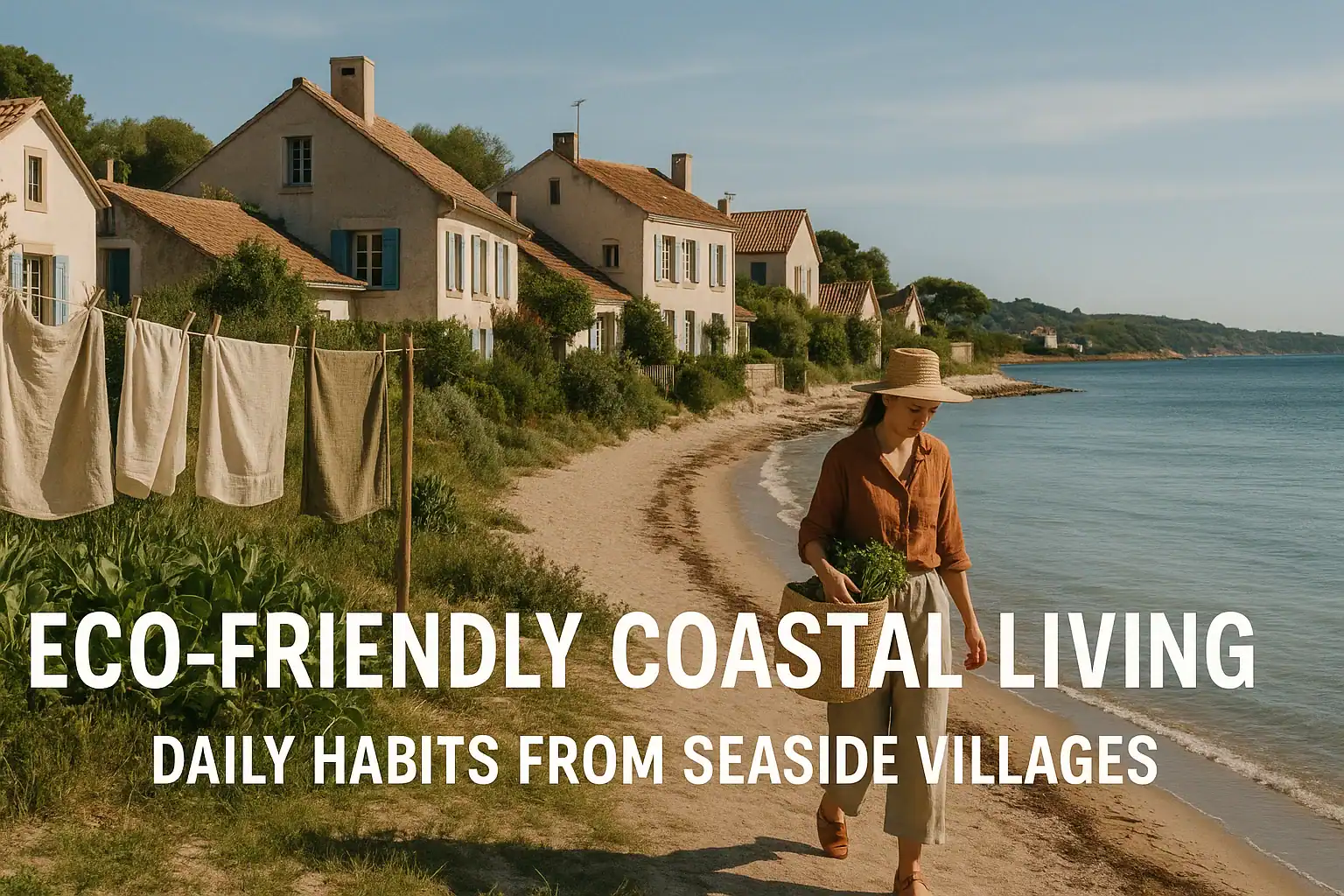

Eco-Friendly Coastal Living
Mediterranean seaside villages have a way of making life feel lighter, calmer, and more connected to nature. The rhythm is slow, the choices intentional, and the environment treated as something to be protected — not just admired. This guide brings together the everyday habits locals naturally follow, offering a blueprint you can use no matter where you live.
Sunlight, Airflow & Natural Light as a Lifestyle
Homes in coastal areas are designed to breathe. Windows stay open most of the day, sunlight warms the rooms naturally, and fresh sea air circulates without artificial intervention. Even small daily actions — drying clothes outside or opening windows early — help reduce energy use and reconnect life to natural cycles.
Local Food, Low Waste, Simple Choices
Seaside households rely heavily on local markets, seasonal produce, and foods that travel short distances. Olive oil, herbs, fresh vegetables, citrus, and fish form the core of meals, reducing packaging and transportation waste. Glass jars, cloth bags, and reusable containers replace disposable items almost entirely.
Walking Culture & Human-Scale Movement
Cars exist, but they are not the default. Narrow streets, shaded paths, and coastal promenades encourage walking or cycling for errands and daily routines. This small shift supports both well-being and the environment while reinforcing a sense of place and community.
Natural Cleaning, Natural Materials
Mediterranean villagers often rely on simple, non-toxic cleaners like vinegar, lemon, olive-oil soap, and baking soda. Homes use natural fibers — linen, cotton, jute — instead of synthetic materials, allowing interiors to feel fresh and connected to the landscape.
Community, Sharing & Resource Mindfulness
Eco-friendly living here isn’t about perfection; it’s about participation. Tools, produce, plants, herbs, and even leftover meals circulate between households. This reduces consumption, minimizes waste, and strengthens community bonds.
Where to Explore More
Before you bring these habits into your home, you may enjoy seeing how they appear in real Mediterranean destinations. Our guide to Mediterranean Islands in Winter shows how sustainability and slow living naturally shape everyday life in coastal regions.
For a deeper dive into eco-friendly households and practical steps to reduce waste, explore this global resource on sustainable daily habits: UN Environment Programme — Sustainable Living Guide.
A Lifestyle Shaped by Sea & Simplicity
Eco-friendly coastal living isn’t a trend — it’s a return to what has always worked. Small daily habits, natural choices, and a closer relationship with the environment create a life that feels grounded, calm, and beautifully sustainable.
Leave a Reply