
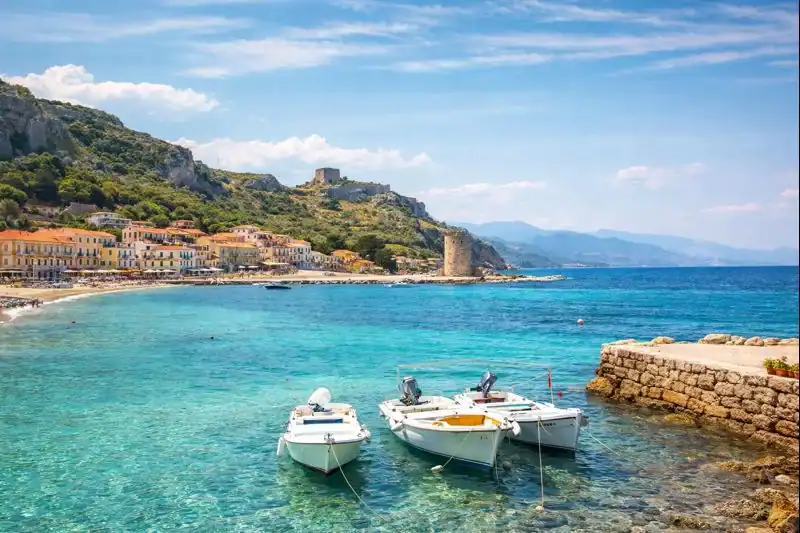
The Peloponnese coastline feels like a quieter version of Greece—less polished, more grounded, and deeply connected to its past. Here, small ports replace busy resorts, beaches remain uncrowded, and ancient sites appear naturally in the landscape rather than behind ticket lines.

Peloponnese Coast Mini Guide
This mini guide is for travelers looking to experience the Peloponnese coast at a slower pace, where everyday life and history blend effortlessly by the sea.
Why the Peloponnese Coast Feels Different
Unlike the Greek islands, the Peloponnese is shaped by distance and depth. Its coastline stretches across multiple seas, revealing dramatically different moods—from calm harbors to wild, open beaches.
What makes it special is not one highlight, but the rhythm:
- small working ports
- local cafés along the waterfront
- ancient fortresses overlooking quiet bays
If you enjoy understated travel moments, you’ll recognize the same feeling described in Old Town Evenings — How to Find the Best Streets Without Crowds.
Small Ports Worth Slowing Down For
Many of the Peloponnese’s most memorable places are its ports—not destinations designed for visitors, but towns that still function around fishing boats and daily routines.
Look for:
- stone quays with a few moored boats
- cafés serving coffee well into the afternoon
- waterfront promenades used more by locals than tourists
These ports are best explored without plans—arrive, walk, sit, and observe.
Beaches That Still Feel Local
The Peloponnese coastline offers beaches that feel refreshingly untouched. Pebble coves and open stretches of sand appear between cliffs, olive groves, and small villages.
Instead of beach clubs, you’ll find:
- clear water with gentle entry
- minimal infrastructure
- space to swim without noise
Bring water, shade, and time. These beaches reward simplicity.
Ancient Sites by the Sea
History in the Peloponnese doesn’t feel isolated. Fortresses, towers, and ruins often stand exactly where you wouldn’t expect them—above a harbor, near a beach, or on a rocky headland.
Ancient sites here are not separate attractions; they are part of the scenery. Visiting them early or late in the day keeps the experience quiet and reflective.
According to UNESCO, protecting cultural landscapes depends on balancing tourism with local life—something the Peloponnese still does naturally in many coastal areas.
When to Visit the Peloponnese Coast
The best time to explore is outside peak summer weeks:
- late spring for wildflowers and empty beaches
- early autumn for warm seas and relaxed towns
Traveling off-season aligns perfectly with slow Mediterranean travel and allows the coast to reveal its quieter character.
How to Explore at a Slow Pace
The Peloponnese rewards travelers who:
- stay longer in fewer places
- choose coastal roads over highways
- allow room for unplanned stops
This is not a place to rush. The coastline unfolds gradually, and that is exactly its charm.
A Coast That Stays With You
The Peloponnese coast doesn’t impress with spectacle—it stays with you through small details: light on stone walls, boats rocking gently in the harbor, and ruins that feel quietly timeless.
For travelers seeking depth rather than highlights, it remains one of Greece’s most rewarding coastal regions.