
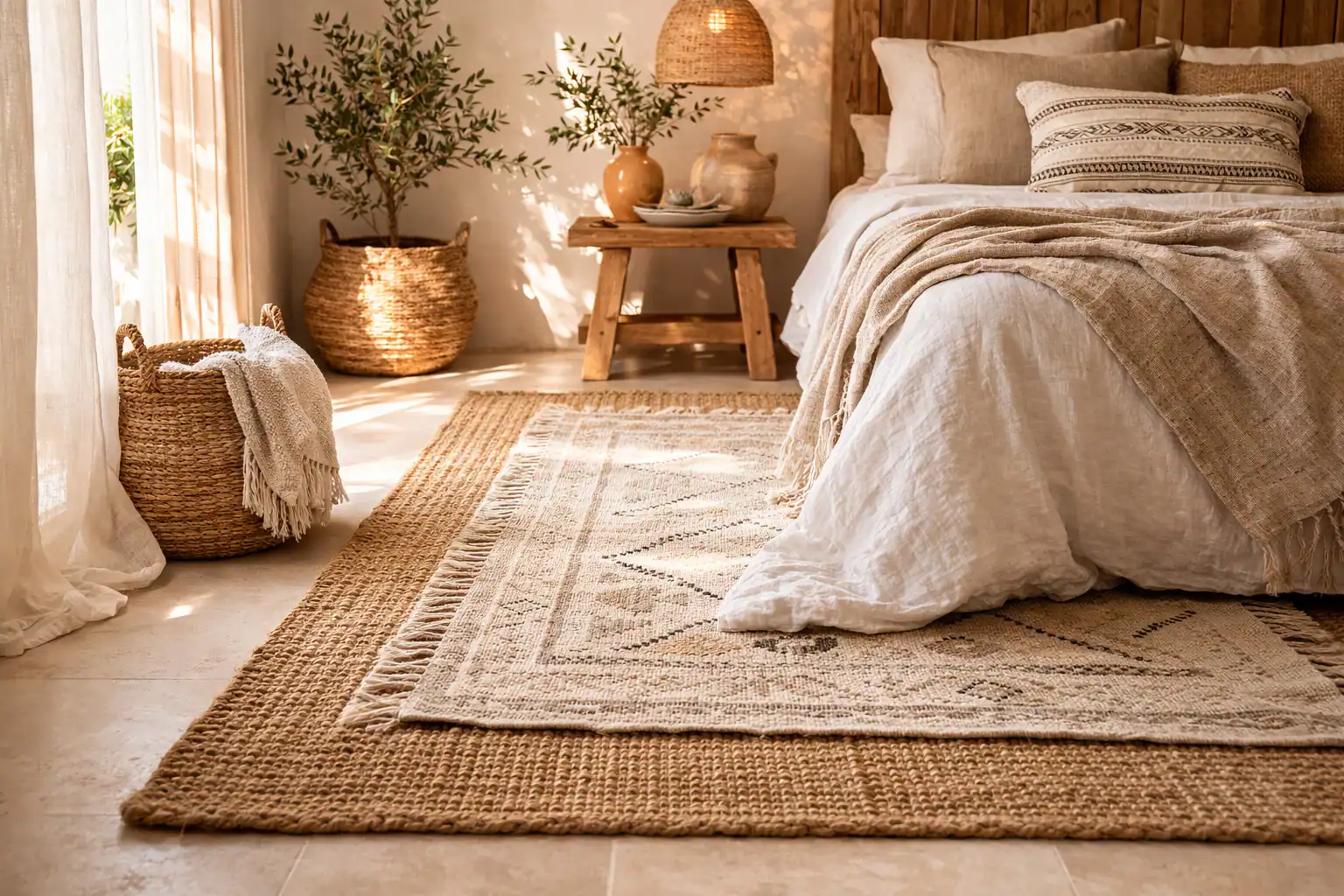
Texture is often what makes a Mediterranean room feel complete. Not more furniture, not more color — but layers. Layering natural fiber rugs Mediterranean style is one of the simplest ways to bring warmth and quiet structure into a space.
Layering Natural Fiber Rugs Mediterranean Style
In many Mediterranean homes, floors are tiled or finished in light stone. Beautiful, but sometimes visually cool. A large jute or sisal rug works as a grounding base — natural, breathable and subtly textured.
The second layer adds softness and personality. A smaller wool rug, a woven flatweave, or a lightly patterned neutral piece placed over the base rug creates depth without overwhelming the room. The key is contrast in texture rather than contrast in color.
In bedrooms, this works especially well. A wide jute rug can extend beyond the bed frame, while a woven accent rug sits slightly off-center or under the lower half of the bed. The result feels intentional but relaxed — not staged.
Living rooms follow the same principle. The base rug defines the seating area. The top rug softens the visual weight of a coffee table or anchors a reading corner. Keeping tones within the same neutral family — sand, cream, warm beige — maintains cohesion.
Proportion matters more than pattern. The top rug should be visibly smaller, allowing the natural fiber base to frame it. This framing effect is what gives the layered look its Mediterranean calm.
If you’re exploring materials in more depth, our guide to Natural Fiber Rugs — How to Choose Jute, Sisal and Wool explains the practical differences between fibers. For broader design principles on natural interiors, Architectural Digest regularly covers layered texture trends in contemporary Mediterranean spaces.
Layering natural fiber rugs Mediterranean style isn’t about decoration for its own sake. It’s about warmth underfoot, quiet texture and a room that feels finished without feeling crowded.