
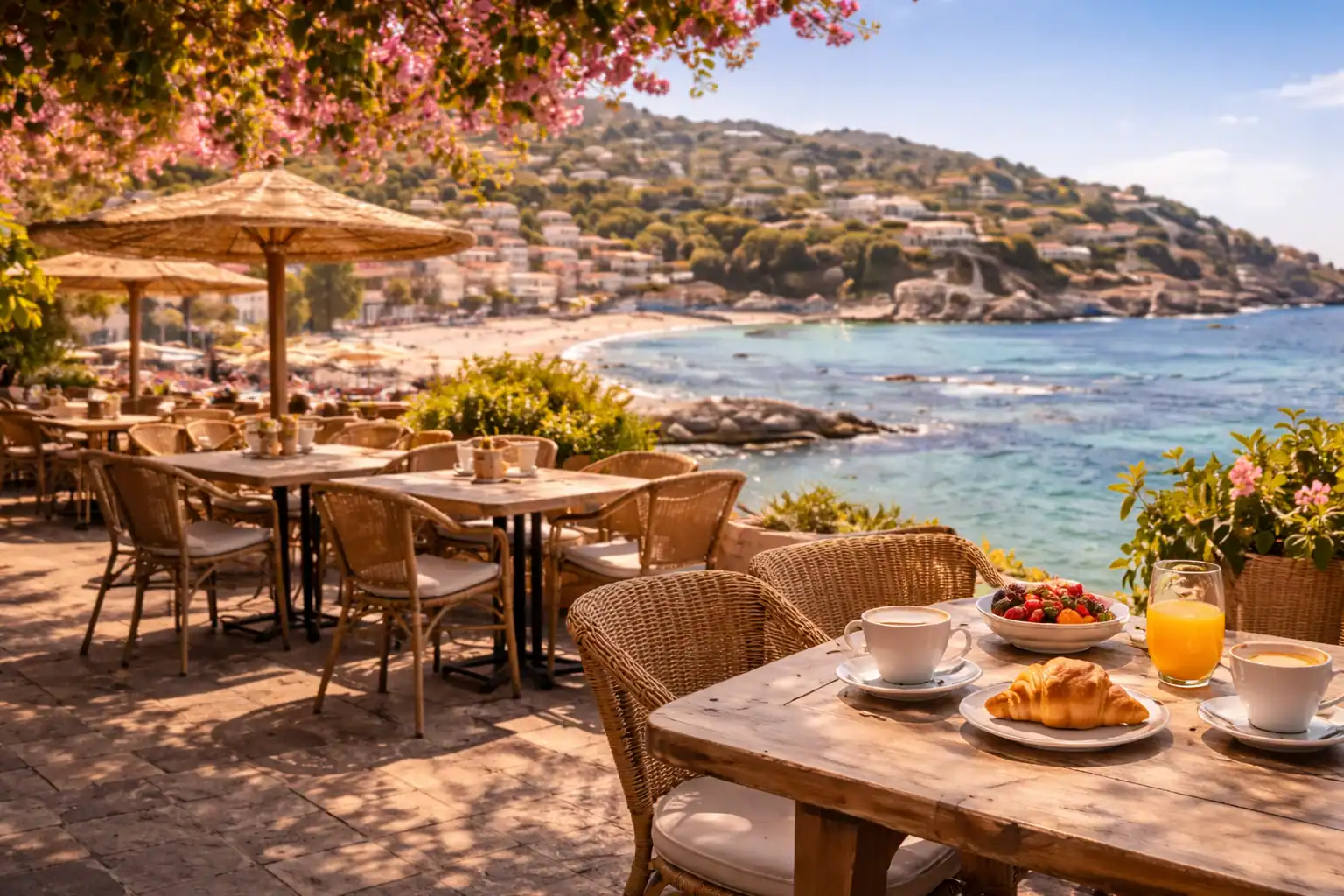
In many Mediterranean coastal towns, cafés are not simply places to drink coffee. They function as small social centers where daily life unfolds slowly. From seaside promenades to shaded plazas, café terraces shape how people interact with public space and with each other.
Across southern Europe, cafés blur the boundary between private life and the street. Tables extend onto sidewalks, chairs face the plaza instead of the wall, and conversations stretch for hours. Coffee becomes less important than the act of sitting, observing and sharing time in a communal space.
In coastal towns the setting amplifies this culture. A café terrace might overlook a small harbor, a beach promenade or a historic square. Morning brings espresso and newspapers, afternoons invite longer conversations, and evenings often transform the same terrace into a lively meeting place under warm Mediterranean light.
Urban design plays a subtle role in this rhythm. Narrow streets open into plazas, buildings create shade during hot hours, and pedestrian areas allow cafés to expand outdoors. These elements make the café not just a business but a key part of the town’s social infrastructure.
Mediterranean cafés also reflect a slower relationship with time. Visitors often notice that a single coffee can last much longer than expected, with no pressure to leave quickly. The pace encourages observation — watching boats return to the harbor, listening to nearby conversations or simply enjoying the atmosphere of the street.
Our article How Mediterranean Cafés Shape Social Life in Spring explores how these everyday rituals become especially visible when cities return to outdoor life after winter.
Urban café culture across the region is also part of broader Mediterranean lifestyle patterns shaped by climate, architecture and daily routines that favor outdoor social life.