
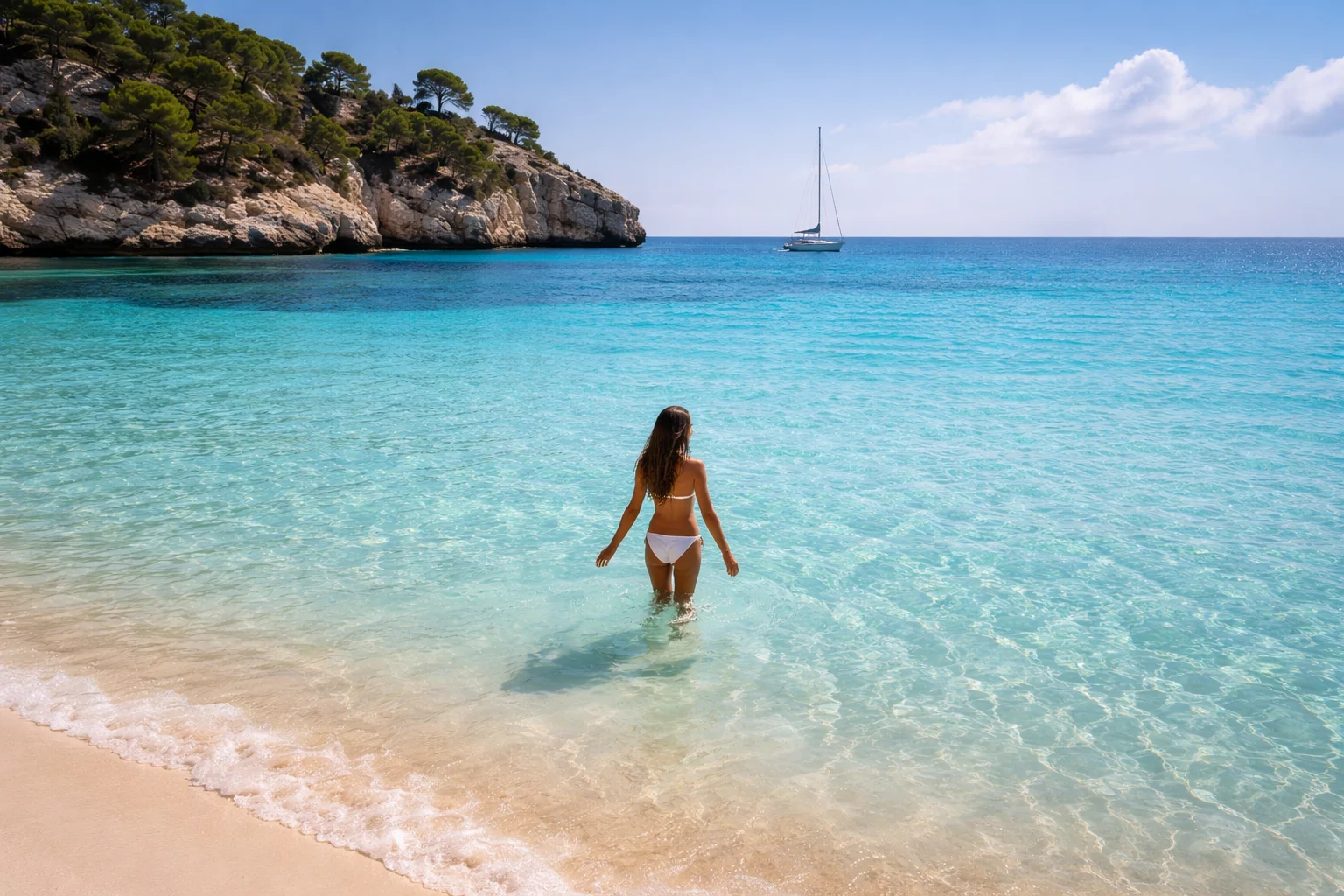
The Mediterranean changes slowly, and the feeling of “warm enough to swim” depends as much on region as on the calendar. In some places, the sea begins to feel inviting in late spring, while in others it stays brisk until early summer. That is why a month-by-month view is more useful than a single answer.
Mediterranean Sea Temperature by Month
When people ask when the Mediterranean becomes swimmable, they are usually asking two things at once: when the water stops feeling cold, and when a beach day starts to feel effortless rather than brave. Across the region, this shift tends to happen gradually from April into June, with southern and eastern areas warming earlier than many northern coasts.
In March, the sea is usually still firmly in winter mode. Coastal walks can be beautiful, and sunny afternoons may feel surprisingly warm on land, but the water often feels more refreshing than relaxing. For most travelers, March is better for sea views, promenades, and shoulder-season atmosphere than for real swimming.
In April, the answer begins to change, but not evenly. A few of the warmer corners of the Mediterranean start to feel more approachable, especially on bright days with little wind. Even then, April swimming is usually for travelers who do not mind cooler water and enjoy quick dips rather than long, lazy time in the sea. This is the month when the idea of swimming becomes possible, but not yet universal.
In May, the Mediterranean starts to open up. This is often the month when beach plans begin to feel realistic instead of optimistic. Islands and southern coastlines usually warm faster, and the combination of stronger sun, calmer weather, and gradually milder water makes swimming much more attractive. For many travelers, May is the true start of the Mediterranean swim season, especially in places already known for early warmth.
In June, the sea usually reaches the point where swimming feels natural across much more of the region. Water temperatures are typically more comfortable, and the experience becomes less about courage and more about pleasure. June is often the safest answer for travelers who want warm-weather energy without relying on luck or unusually hot spring days.
By July and August, most Mediterranean destinations feel fully established as summer beach territory. At that stage, the question is no longer whether the sea is swimmable, but which destination offers the kind of coast, pace, and atmosphere you want most.
The main reason this varies so much is geography. The Mediterranean is one sea, but it does not warm at the same speed everywhere. Southern and eastern destinations often begin earlier, while some western or more exposed stretches may still feel cooler in spring. Wind matters too. Even when the sun is strong, a breezy day can make the sea feel sharper than the month alone would suggest.
That is why “swimmable” is not really a scientific threshold. For some people, it means a quick morning dip. For others, it means floating comfortably for half an hour without hesitation. The best way to think about Mediterranean swimming season is not as a single starting line, but as a gradual map that moves from cooler spring water to long, easy summer bathing.
If your trip is built around beach time, late May and June are often the most dependable choices. If you are happy with a mixed itinerary of walking, city time, cafés, and occasional swims, April can still be rewarding in the right destination. Our guide to whether the Mediterranean is warm enough to swim in April gives a more detailed look at that early-season question, while the broader Mediterranean climate overview from Climate to Travel helps explain why regional differences can feel so noticeable from one coast to another.
In the end, the Mediterranean becomes swimmable in stages, not all at once. The real secret is choosing the right month for the right part of the region — and matching it to the kind of swim you actually want.