
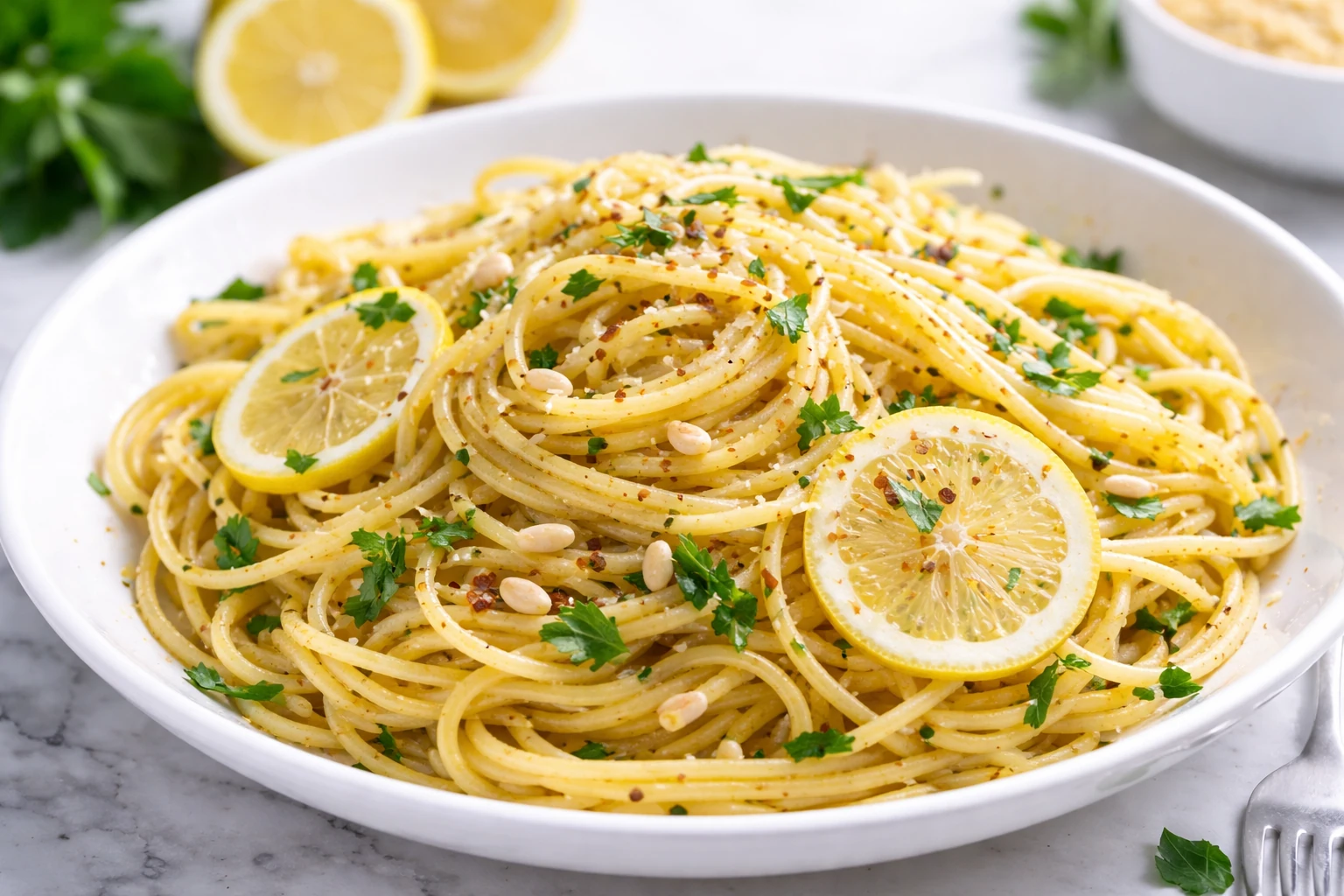
Mediterranean lemon pasta is at its best when the lemon tastes fresh and the olive oil actually coats the pasta instead of collecting at the bottom of the bowl. The ingredient list is short, but the technique matters.
For me, the useful part of this recipe is the way a little starchy pasta water turns olive oil, garlic and lemon into something that feels like a sauce without adding cream or a heavy amount of cheese.
The lemon also goes in stages. Zest gives fragrance, while juice brings acidity. Treating them as two different ingredients keeps the pasta bright without making it sharply sour.
What makes lemon pasta glossy instead of oily
Olive oil and water do not naturally want to stay together. The starch released by pasta into its cooking water helps bridge that gap.
When hot pasta, olive oil and a small amount of starchy water are tossed vigorously, the liquid becomes cloudy and lightly creamy rather than separating into oil and water.
You do not need a large amount of pasta water. Start with less than you think you need, toss well, then add another tablespoon or two if the pasta still looks dry.
This is one of the simple techniques behind many lighter pasta dishes. Our Mediterranean Pasta Traditions guide looks more broadly at how olive oil, cooking water, herbs, vegetables, seafood and beans shape everyday pasta around the Mediterranean.
Mediterranean Lemon Pasta with Olive Oil & Herbs
Servings: 4
Prep time: 10 minutes
Cook time: 10 minutes
Total time: 20 minutes
Calories: approximately 440 per serving
Ingredients
- 12 ounces / 340 g spaghetti or linguine
- 1/4 cup / 60 ml extra virgin olive oil, divided
- 2 garlic cloves, finely sliced or grated
- Finely grated zest of 1 large lemon
- 2 tablespoons fresh lemon juice, plus more if needed
- 3/4 cup reserved pasta cooking water, as needed
- 1/3 cup fresh flat-leaf parsley, finely chopped
- 1 tablespoon fresh basil, finely sliced, optional
- 1/4 teaspoon red pepper flakes, optional
- Fine sea salt, for the pasta water and to taste
- Freshly ground black pepper, to taste
- Optional: finely grated Parmesan or Pecorino for serving
Instructions
- Prepare the lemon and herbs. Finely zest the lemon before squeezing it. Chop the parsley and basil and keep everything ready beside the stove.
- Cook the pasta. Bring a large pot of well-salted water to a boil. Cook the pasta until al dente according to the package timing.
- Warm the garlic gently. While the pasta cooks, add 3 tablespoons of olive oil and the garlic to a large skillet over low heat. Cook for about 1 minute, just until fragrant. Do not let the garlic brown.
- Reserve the pasta water. Before draining, scoop out at least 3/4 cup of the cloudy cooking water.
- Start the emulsion. Transfer the drained pasta directly to the skillet. Add about 1/3 cup of pasta water and toss vigorously over low heat for 30–60 seconds. The oil and water should begin coating the strands in a thin, glossy layer.
- Take the pan off the heat. Add the remaining tablespoon of olive oil, the lemon zest, 1 tablespoon of lemon juice, parsley, basil and optional red pepper flakes.
- Toss again. Toss firmly, adding more pasta water one tablespoon at a time until the pasta looks glossy and moves easily in the pan.
- Adjust the lemon. Taste, then add the remaining lemon juice only if the pasta needs more acidity. Season with black pepper and additional salt if needed.
- Serve immediately. Finish with a little more parsley, black pepper and optional Parmesan or Pecorino.
Pasta water is part of the sauce
Do not drain the pasta and then remember the cooking water afterward. Once it goes down the sink, the easiest tool for making the olive oil cling to the pasta is gone.
Reserve more than you expect to use. You may need only one-third to one-half cup, but having extra gives you control.
The water should look slightly cloudy. That starch is useful. Add it gradually while tossing rather than pouring the whole amount into the pan at once.
If the pasta looks greasy, it usually needs more tossing and a little pasta water, not another pour of olive oil.
Lemon zest and lemon juice do different jobs
Zest contains the fragrant oils from the outer yellow skin. It gives the pasta a clear lemon aroma without adding much liquid or acidity.
Juice tastes brighter and sharper, but too much can overwhelm a simple olive oil sauce.
That is why the recipe uses the zest of a whole lemon but begins with only half of the juice. Taste first. The second tablespoon is there if the dish actually needs it.
I prefer to add the lemon juice after the pan comes off direct heat. It keeps the citrus fresher and makes it easier to stop at the point where the pasta tastes bright rather than sour.
A fine zester makes the lemon easier to control
This post may contain affiliate links, including Amazon links. As an Amazon Associate, I earn from qualifying purchases, at no extra cost to you.
A fine stainless-steel citrus zester makes it easier to remove just the fragrant yellow part of the lemon instead of digging into the bitter white pith.
Zest the lemon directly over a bowl or over the finished pasta so the aromatic oils released from the peel stay with the food rather than on the cutting board.
Keep the garlic gentle
Garlic belongs in the background here. Brown garlic can taste bitter next to fresh lemon and make a delicate pasta feel much heavier.
Use low heat and stop as soon as the garlic smells fragrant. The oil does not need to sizzle aggressively.
If you prefer a milder garlic flavor, slice the cloves rather than grating them. Grated garlic disperses more thoroughly and tastes stronger.
Choose an olive oil you enjoy tasting
Because there is no tomato sauce, cream or large amount of cheese hiding the oil, its flavor remains noticeable.
A fruity extra virgin olive oil works especially well. It does not need to be expensive, but it should taste pleasant enough that you would happily drizzle a little over vegetables or bread.
For more everyday uses beyond pasta, our Olive Oil for Everyday Mediterranean Meals covers practical ways to use it with vegetables, beans, soups, fish, salads and simple plates.
What herbs work best?
Parsley is the easiest base because it stays fresh without fighting the lemon.
A little basil can make the pasta feel softer and more summery, but it is optional. Mint can also work in a small amount if you want a cooler flavor.
What matters most is adding tender herbs near the end. Long cooking dulls their color and aroma.
Do you need Parmesan?
No. The pasta is complete with lemon, olive oil, garlic, herbs and cooking water.
A small amount of finely grated Parmesan or Pecorino can be good at the table, especially if you want a slightly saltier, fuller finish. It should remain an accent rather than turning the dish into a cheese sauce.
If you want something more substantial and coastal, our Mediterranean Garlic Shrimp Linguine uses the same general language of olive oil, garlic, lemon and herbs but adds shrimp and tomatoes for a fuller main dish.
Why did my lemon pasta turn dry?
The pasta continues absorbing moisture after it leaves the cooking pot.
A sauce that looks perfect while you are tossing can tighten a minute later, especially if the pasta sits before serving.
Add another tablespoon or two of warm pasta water and toss again. Avoid fixing dryness with only more olive oil, which can make the pasta greasy without making the sauce smoother.
Why does my lemon pasta taste bitter?
There are three common causes: browned garlic, white lemon pith or an aggressively bitter olive oil.
When zesting the lemon, remove only the yellow surface. Stop before the white layer underneath. Keep the garlic pale and fragrant, and use an olive oil that tastes good on its own.
Lemon seeds can also add bitterness if one slips into the juice, so strain them out before adding the juice to the pasta.
Can you make it ahead?
This pasta is best immediately after tossing because the sauce is built around a loose emulsion of olive oil and pasta water.
You can prepare the lemon zest, juice, garlic and herbs ahead, but cook the pasta when you are ready to eat.
Leftovers can be refrigerated in a covered container for up to 3 days. Reheat gently with a spoonful of water, then finish with a little fresh lemon zest or parsley to bring some brightness back.
A simple pasta still depends on technique
A short ingredient list does not mean every ingredient should simply be mixed together at once. Here, timing makes the difference: garlic stays gentle, starchy water brings the oil together, zest provides fragrance, and lemon juice goes in late enough to stay fresh.
Harvard’s Mediterranean Diet overview describes olive oil, whole grains, vegetables, legumes, nuts and other minimally processed foods as central parts of the broader Mediterranean dietary pattern.
This pasta is much more specific than that larger pattern. It is simply a useful way to turn pasta, olive oil, lemon and herbs into a bright dinner without needing a heavy sauce.