
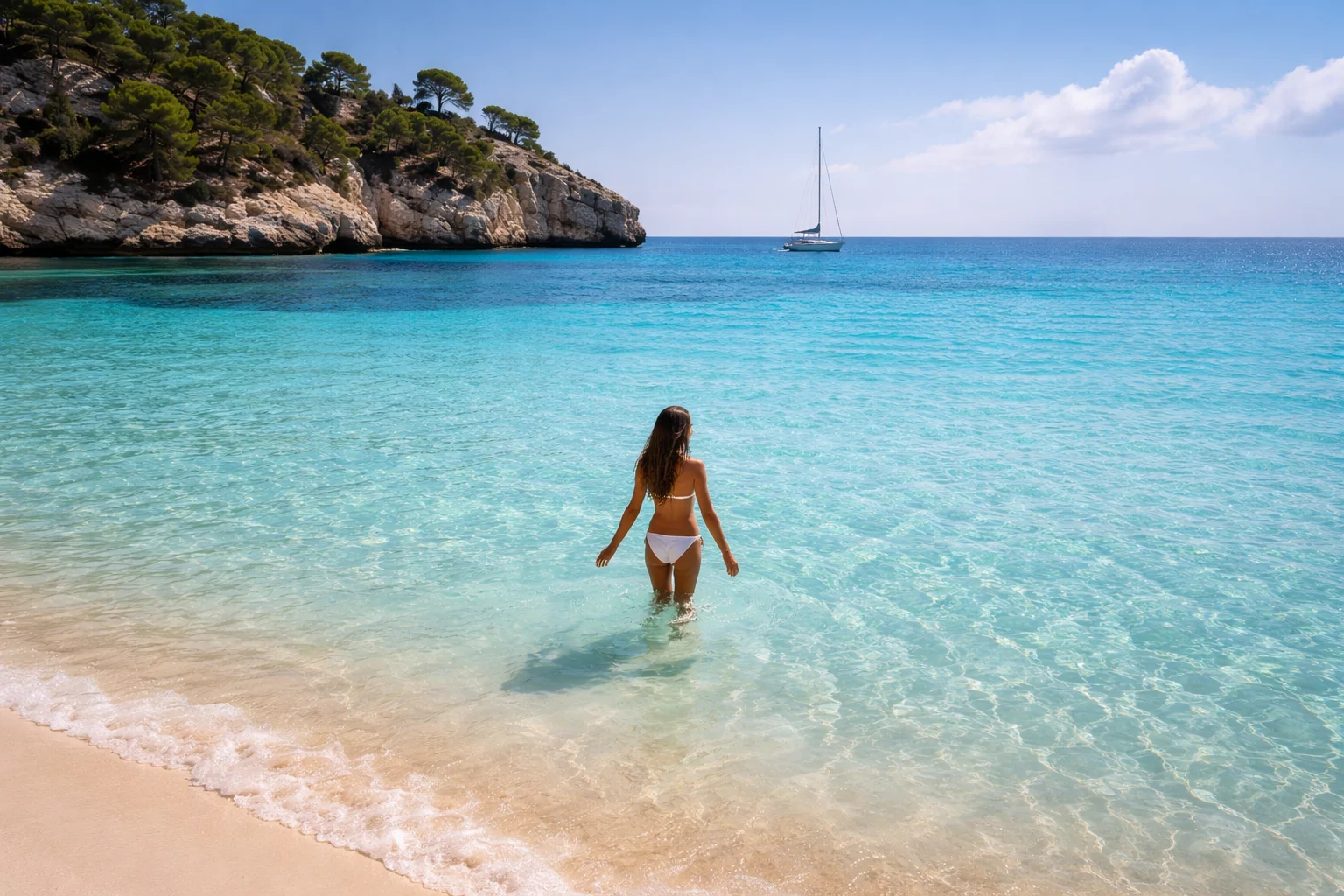
The Mediterranean does not become swimmable on one exact date.
That is the first thing to know. A beach can look ready for summer long before the water feels warm. You can have a sunny April afternoon, a hot May day, or even a beautiful early June beach, and still step into the sea thinking: this is fresher than it looks.
The sea warms more slowly than the air. Land can heat up quickly after a few bright days, but the water carries winter for longer. That is why Mediterranean sea temperature by month is more useful than simply asking whether the weather will be warm.
Mediterranean Sea Temperature by Month
When people ask when the Mediterranean becomes swimmable, they are usually asking two different questions at once.
The first is practical: when can I get in without feeling shocked by the cold?
The second is emotional: when does a beach day feel easy, relaxed and summery instead of brave?
Those are not always the same answer. Some travelers enjoy a short, fresh swim in May. Others do not feel comfortable until late June or July. A regular swimmer, a child, a cold-water swimmer and someone who wants long floating time will all judge the same sea differently.
So the better question is not only “Is the Mediterranean warm enough to swim?” It is: what kind of swim do you want?
What “Swimmable” Really Means
“Swimmable” is not a scientific line that everyone crosses at the same moment.
For some people, swimmable means a quick dip after sitting in the sun. For others, it means staying in the water for twenty minutes without thinking about the temperature. Some people want refreshing water. Others want soft, warm water that feels almost effortless.
This is why Mediterranean travel advice can sound confusing. One person says they swam happily in May. Another says the same destination was too cold. Both can be telling the truth.
Several things change the feeling:
- whether you swim in the morning or afternoon
- whether the beach is sheltered or exposed to wind
- whether the water is shallow or deep close to shore
- whether the day has had several hours of strong sun
- whether you are used to cooler water
- whether you want a quick dip or a long swim
A May swim in shallow, calm, sunny water can feel better than a June swim on an exposed, windy beach. That is why month matters, but beach conditions matter too.
For a general reference point, sea water temperature comfort ranges can help you understand why the same water can feel fine for one swimmer and too fresh for another. The number matters, but personal tolerance, wind, sun and how long you want to stay in the sea matter just as much.
March: Beautiful Coast, Cold Water
In March, the Mediterranean is usually still in winter mode.
Coastal walks can be beautiful. Sunny afternoons can feel surprisingly pleasant. Cafés may start to move tables outside in warmer places, and the light can make the sea look inviting from a distance.
But for most travelers, March is not a swimming month.
The water often feels cold because it has not had enough warm weather to recover from winter. You may see local swimmers, cold-water swimmers, or people taking a very quick dip, especially in southern and eastern areas. But for a normal beach holiday, March is better for sea views, promenades, island towns and spring atmosphere than for real swimming.
Choose March if you want quiet coastlines, not warm water.
April: Possible, but Mostly for Quick Dips
In April, the answer starts to change, but slowly.
The air can feel warm in many Mediterranean places, especially on bright afternoons. This is where the first confusion begins. You may sit outside comfortably and assume the water will match the mood.
Often, it does not.
April swimming is possible in warmer corners of the Mediterranean, especially later in the month and on calm sunny days. But for most travelers, it is still a quick-dip month rather than a relaxed swimming month.
This is the season when the beach can be pleasant even if the sea feels hesitant. You can walk barefoot on the sand, sit near the water, have lunch outside and maybe swim for a few minutes if conditions are kind.
If your trip depends on swimming, April is risky. If swimming would be a bonus, April can still be very rewarding.
For a deeper early-season look, whether the Mediterranean is warm enough to swim in April is the better companion article.
May: The First Real Swims, but Not Everywhere
May is when the question becomes serious.
Across the Mediterranean, the sea begins to feel more approachable, especially later in the month. The beach starts to look and feel more like part of the trip. In warmer southern and eastern areas, many travelers can manage their first real swims.
But May is still not guaranteed.
This is the month when photos can mislead you. The water may look turquoise, clear and completely summery, while still feeling fresh when you step in. A quick swim after lying in the sun may feel wonderful. A long swim early in the day may feel too cold.
May also depends heavily on region. Warmer eastern and southern areas usually have better chances for early swimming than many northern coasts. But even then, wind, depth and beach shape can change the experience.
That is why May is best for travelers who want beach time, but can stay flexible. Go for light, space, coastal walks, outdoor meals and possible swims. Do not build the whole trip on warm water unless you choose carefully.
If you are planning a first swim specifically in May, Best Mediterranean Destinations for a First Swim in May works better than this general guide because it looks at destination choices, not only the monthly rhythm.
June: The Practical Turning Point
June is the month when the Mediterranean becomes more reliably swimmable for many travelers.
Not everywhere at once, and not always from the first week, but the general feeling changes. The sea has had more time to warm. Beach days become easier. More people start to plan around swimming rather than treating it as a maybe.
Early June can still feel fresh in some places, especially after wind, cloudy days or on deeper exposed beaches. Late June usually feels much more confident. This is when many Mediterranean destinations begin to shift from spring coast to summer beach season.
June is also a good month because the land is not always as hot or crowded as peak summer. You can often enjoy the beach without the full pressure of July and August, especially if you start early and choose your base well.
For travelers who want the first safer beach-led trip, June is often the answer.
If your trip is focused on Sardinia, Southern Sardinia in June is a good example of how the month changes the rhythm: the beach can become the center of the day, while the island is still softer than peak summer.
July and August: Widely Swimmable, but Not Always Easier
By July and August, most Mediterranean destinations are fully in summer beach mode.
The sea is usually warm enough for normal swimming across much of the region. Long swims feel easier. Children usually find the water more comfortable. Beach days become less about bravery and more about heat, shade and timing.
But this does not mean July and August are always the best months.
The sea may feel easier, but the rest of the trip can become harder. Beaches are busier. Accommodation prices can rise. Parking becomes more difficult. Famous coastlines may feel crowded from morning to evening. The heat can also make sightseeing, walking and old-town exploring more tiring.
This is the trade-off. July and August usually give you the most reliable swimming, but not always the most pleasant travel rhythm.
Choose these months if warm water is your priority. Avoid them if you want quiet beaches, easy movement and less pressure around every decision.
September: Often Better Than Spring for Swimming
September is one of the best swimming months in the Mediterranean.
The reason is simple: the sea has had the whole summer to warm. Even when the air begins to soften, the water often stays pleasant. This makes September very different from May. Both can have beautiful weather, but the sea is usually much more forgiving after summer than before it.
For many travelers, September gives the best balance: warm water, fewer crowds than August, softer evenings and a calmer rhythm in many coastal places.
If you want to turn that swimming comfort into a full late-summer trip, our guide to where to go in the Mediterranean in September looks at destinations where the sea still feels warm, the crowds begin to soften, and the evenings become easier.
Early September can still feel like full summer. Later September may become more relaxed, especially in island towns and beach destinations where the strongest peak-season crowds have passed.
Choose September if you want swimming comfort without the heaviest summer pressure.
October: Still Possible in Many Places, but More Variable
October can still be swimmable, especially in warmer southern and eastern parts of the Mediterranean.
The sea often holds warmth better than the air. This means a sunny October day can produce a surprisingly pleasant swim, especially in places like Cyprus, southern Greece, parts of Türkiye, Sicily, Malta or southern Spain.
But October is more variable than September. The days are shorter, weather can change more quickly, and a windy or cloudy stretch can make the sea feel less inviting.
This is a good month for travelers who want a mixed trip: swimming if the day is right, but also towns, food, walking, markets and slower travel. If your dream is a guaranteed beach-only holiday, October may feel uncertain. If swimming is part of a wider trip, it can be excellent.
Choose October if you want leftover summer warmth, not a fixed summer guarantee.
East vs West Mediterranean
The Mediterranean is not one single swimming season.
The eastern and southern parts often become more approachable earlier and stay pleasant later. This is why Cyprus, parts of Greece, southern Türkiye and some southern island destinations often appear in early and late-season swimming discussions.
The western and northern parts can still be wonderful, but they may feel more seasonal. The Balearics, northern Italy, parts of Croatia and the French Riviera can be beautiful in spring, but the sea may take longer to feel comfortable for normal swimming.
This does not mean one side is always better. It depends on the trip.
If you want the earliest possible swim, look east and south.
If you want the warmest, easiest water, choose high summer or early autumn.
If you want quiet coastal travel with optional swims, May or October can work beautifully.
The mistake is treating the whole Mediterranean as if it warms evenly. It does not.
Why Beach Shape Matters
The same destination can give you two completely different swimming experiences on the same day.
A shallow, sheltered bay can feel warmer and calmer. A deep, open beach can feel colder even if it is nearby. Wind can make a beautiful beach feel uncomfortable. Rocks, currents, shade and exposure can all change how the water feels.
This is why practical beach choice matters more in spring and early summer than in peak summer. In July, many beaches feel warm enough. In May or early June, you may need to choose more carefully.
Look for:
- sheltered coves
- shallow entry
- afternoon sun
- low wind
- beaches protected by land shape
- easy access so you can change plans if needed
This is also why local advice can be more useful than a single average temperature. A sea-temperature chart tells you the season. The beach itself tells you whether that day will feel good.
What Month Should You Choose?
Choose April if you want quiet coastal travel and swimming is only a bonus.
Choose May if you want the first real chance of swimming, but you can accept fresh water and flexible plans.
Choose June if you want the first practical beach-holiday month, especially later in the month.
Choose July or August if warm water matters more than crowds, heat or price.
Choose September if you want one of the best balances between warm water and a softer travel rhythm.
Choose October if you want a mixed trip with possible swims in warmer regions, but not a full summer guarantee.
The best month is not the same for everyone. It depends on whether you want a quick dip, regular swimming, warm floating, quiet beaches, lower prices or a full summer atmosphere.
Final Thought
The Mediterranean becomes swimmable in stages, not all at once.
March and April are mostly for views, walks and brave dips. May opens the door, but does not guarantee warm water. June is the practical turning point for many travelers. July and August bring the most reliable swimming, but also the most pressure. September often gives the kindest balance. October can still surprise you in the warmer parts of the region.
The real secret is not finding one perfect month. It is matching the month to the kind of swim you actually want.
Water temperature is only one part of the choice. Sometimes you do not need a full beach day at all — just an easy place to cool down, swim for a little while, dry off and continue the day. For that kind of stop, a Mediterranean beach for a short swim should be chosen for access, calm water, shade and a simple exit, not only for how beautiful it looks in photos.
A quick dip, a proper swim, a lazy warm float and a beach holiday are not the same thing. Once you know that, the Mediterranean becomes much easier to plan.