
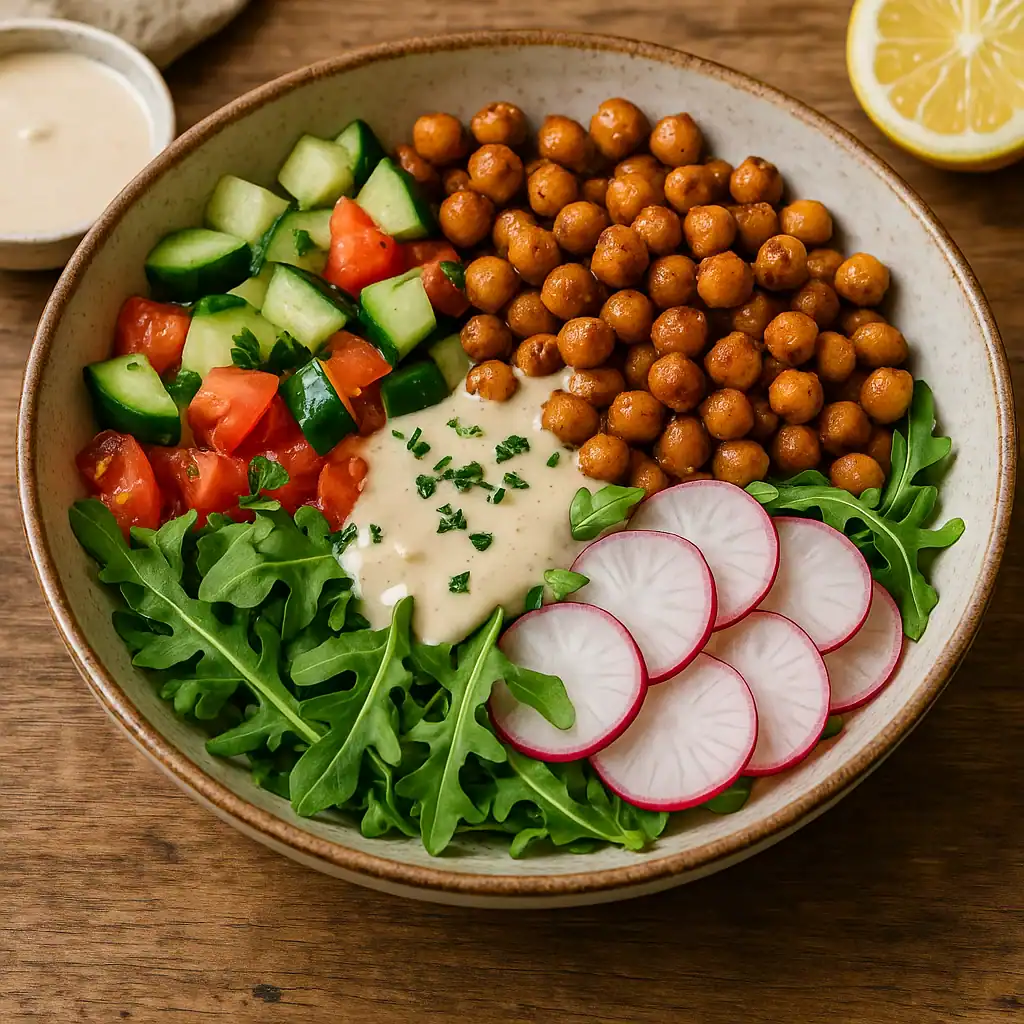
A chickpea tahini mezze bowl can look like the easiest kind of meal: roast chickpeas, cut vegetables and add sauce. Yet a bowl assembled without attention can become surprisingly dry, heavy or disconnected.
The contrast is what makes it work. The chickpeas should arrive warm, with lightly crisp edges and a softer center. The vegetables should remain cold and fresh. The tahini should be loose enough to move through the bowl rather than sitting on top like a thick paste.
For me, the best version would not hide every ingredient beneath sauce. I would want the cucumber to remain crisp, the tomatoes juicy, the greens fresh and the roasted chickpeas warm enough to make the bowl feel like dinner rather than a collection of cold vegetables.
Quick answer: keep the temperatures and textures separate
Roast the chickpeas until their surfaces are lightly crisp, but stop before they become dry all the way through. Prepare the vegetables while the chickpeas cook, then keep them refrigerated or at least away from the warm baking sheet.
Whisk the tahini with lemon, garlic and cold water until it becomes smooth and pourable. Add the dressing only when serving.
The bowl works because it brings together:
- warm chickpeas with lightly crisp edges;
- cool cucumber, tomatoes and radishes;
- fresh greens and herbs;
- salty olives or optional feta;
- a creamy but fluid tahini sauce;
- lemon and acidity to keep the meal bright.
Why the chickpeas should be roasted but not dried out
Extra-crispy chickpeas are useful as a snack or salad topping, but this bowl needs something slightly different.
The chickpeas should develop color and a thin roasted exterior while remaining creamy inside. If they are baked until completely hard, the combination of dry chickpeas and tahini can make the entire bowl feel dense.
Drying the chickpeas before roasting is still important. Surface moisture prevents browning and causes them to steam initially. Pat them thoroughly with a clean towel, but do not remove every skin unless one comes away naturally.
Use enough olive oil to coat them lightly, not enough to leave a pool on the baking sheet.
Do you need to peel canned chickpeas?
No. Removing all the skins takes time and does not improve this bowl enough to justify the extra work.
Loose skins can be discarded while drying the chickpeas because they may darken faster in the oven. Leave the rest in place.
The more important steps are rinsing the chickpeas well, drying them thoroughly and giving them enough room on the baking sheet.
Give the chickpeas enough room to roast
Spread them in one layer with some space between them. A crowded pan traps moisture, delaying browning and producing chickpeas that are soft on the outside.
Shake or stir the chickpeas once during roasting so that several surfaces meet the hot pan.
They are ready when they look lightly golden and feel firmer at the edges but are not hard through the center. Taste one before taking the pan from the oven.
Add ground spices before roasting
Cumin and paprika give the chickpeas warmth without turning the bowl into a heavily spiced meal.
Mix the chickpeas with olive oil, cumin, paprika, salt and black pepper before they enter the oven. The oil helps the spices remain attached.
Do not use a large amount of spice. The chickpeas still need to work with lemon, tahini, cucumber and fresh herbs.
For a hotter version, add a small pinch of cayenne or chili flakes rather than increasing every seasoning at once.
The vegetables should stay cold and crisp
Warm chickpeas can begin softening greens and cucumber if everything is mixed too early.
Prepare the vegetables while the chickpeas roast, but keep the components separate until serving. Dry the greens after washing, and drain especially juicy chopped tomatoes briefly.
The cucumber should provide a clean crunch. Radishes add a sharper bite, while tomatoes bring sweetness and moisture.
Our tomato, caper and chickpea salad uses a different balance, with juicy tomatoes and capers leading the dish rather than warm roasted chickpeas and tahini.
Choose greens that do not dominate the bowl
Arugula brings a peppery flavor and works well when the tahini sauce is mild. Baby spinach creates a gentler bowl. Romaine gives more crunch and keeps its shape beneath the other ingredients.
A mixture can also work, but avoid using so many different leaves that the mezze character disappears into a large green salad.
Use the greens as a fresh base, not as the largest component of the meal.
How to make tahini sauce smooth and pourable
Tahini can behave unexpectedly when lemon juice is added. It may thicken, seize or appear slightly separated. This does not mean the sauce is ruined.
Whisk the tahini with lemon juice, garlic and salt first. The mixture will probably become firm. Add cold water one tablespoon at a time and continue whisking.
As more water is incorporated, the tahini should relax into a pale, creamy sauce.
The final consistency should be looser than hummus and slightly thicker than a vinaigrette. It should fall from a spoon in a continuous ribbon rather than remaining in one heavy mound.
Why cold water changes tahini sauce
Tahini becomes smoother as water is worked gradually into the sesame paste. Adding all the water at once can make it harder to judge the consistency.
Different tahini brands also behave differently. One may need three tablespoons of water, while another may need five or slightly more.
Follow the texture rather than forcing the sauce to match one exact quantity.
If the sauce becomes too thin, add another small spoonful of tahini. If it remains too thick, add cold water one teaspoon at a time.
Keep the garlic restrained
Raw garlic becomes stronger as the sauce rests. One small clove is usually sufficient for this quantity of tahini.
Grate or crush it finely so that it spreads evenly through the sauce. Large raw pieces can dominate a bite and cover the freshness of the vegetables.
For a softer garlic flavor, allow the grated garlic to sit in the lemon juice for several minutes before adding the tahini.
Do not dress the entire bowl in advance
Tahini sauce contains enough moisture and acidity to soften greens and vegetables. Once the bowl is fully dressed, the contrast begins to disappear.
Assemble shortly before eating and drizzle only part of the sauce over the top. Serve the remainder at the table.
This also allows each person to decide whether they want a lightly dressed bowl or something creamier.
How to assemble the bowl so every bite feels balanced
Begin with greens, but do not compress them into a deep layer. Arrange the cucumber, tomatoes and radishes in separate areas rather than mixing everything immediately.
Add the warm chickpeas last so they do not sit on the vegetables while you finish preparing the table.
Spoon tahini sauce across several parts of the bowl instead of placing all of it in the center. Finish with herbs, olives and optional feta.
A useful order is:
- greens at the bottom;
- cucumber, tomatoes and radishes;
- warm roasted chickpeas;
- tahini sauce;
- olives or feta;
- fresh parsley or mint;
- lemon and a small final drizzle of olive oil, if desired.
Do not overload the mezze bowl
A mezze bowl does not improve automatically with every Mediterranean ingredient added to it.
Hummus, feta, olives, pickles, tahini, roasted peppers and several salads can all be delicious, but using all of them at once can make the bowl salty, heavy and visually crowded.
Choose one creamy element, one or two salty accents and several fresh vegetables.
In this version, tahini is the creamy component. Olives or feta provide salt. Cucumber, tomatoes, radishes, greens and herbs bring freshness.
If adding hummus, reduce the tahini sauce or serve it as a small spoonful rather than another large layer.
What can you add without losing the balance?
Several additions work when used with restraint:
- pickled red onions for acidity;
- roasted red peppers for sweetness;
- a spoonful of hummus;
- a few chopped Kalamata olives;
- crumbled feta;
- toasted pita wedges;
- cooked bulgur or couscous for a larger meal;
- fresh mint, parsley or dill.
Add only what solves something the bowl is missing. Grains make it more substantial. Pickles add acidity. Feta adds salt. Pita provides a soft or crisp element for collecting the sauce.
For another fresh component at a shared summer table, add our zucchini ribbon salad with feta, mint and lemon.
How to make the bowl more filling
The chickpeas and tahini already provide substance, but a very active day may call for a larger meal.
Add a modest serving of bulgur, couscous, farro or warm pita. Keep the portion small enough that the fresh vegetables remain noticeable.
Our lemon herb couscous salad can also be served as a separate side when preparing a larger shared meal.
How to make it vegan
The base recipe is naturally vegan. Use olives for the salty element and omit the optional feta.
Check packaged pita or other additions if strict dietary requirements apply, but the chickpeas, vegetables and tahini sauce contain no dairy ingredients.
Can you use an air fryer for the chickpeas?
Yes. Dry and season them in the same way, then air-fry in a single layer until lightly crisp, shaking the basket several times.
Air fryers vary considerably, so begin checking early. The aim is roasted edges and a creamy center, not completely dehydrated chickpeas.
Can you prepare the components in advance?
Yes, but store them separately.
The tahini sauce can be prepared ahead and refrigerated in a covered container. It will usually become thicker when cold. Whisk in a teaspoon or two of water before serving.
Wash and dry the greens, cut the radishes and prepare the herbs ahead. Cucumber and tomato are best cut closer to serving because they release more water.
The chickpeas can be roasted in advance, but they are best when freshly warm. Reheat them briefly in the oven rather than microwaving them until soft.
How to store leftovers
Store roasted chickpeas, vegetables, greens and tahini sauce in separate covered containers whenever possible. An already assembled bowl becomes softer as it rests.
Refrigerate perishable components promptly and use cooked leftovers within three to four days. USDA guidance provides additional information in its leftovers and food safety guide.
For the best quality, use cut cucumber, tomatoes and dressed greens sooner. Inspect all fresh ingredients before serving again.
Can you freeze a chickpea tahini mezze bowl?
Do not freeze the assembled bowl. Cucumber, tomatoes, greens and tahini sauce will lose their intended textures.
The cooked chickpeas can technically be frozen, but roasting a fresh drained can is usually easier and produces a better contrast.
Why did my tahini sauce become bitter?
Some tahini naturally tastes more bitter than others. Too much raw garlic, excessive lemon pith or old sesame paste can make the bitterness more noticeable.
Use fresh tahini, add only the yellow lemon zest if using zest, and keep the garlic restrained. A small amount of water and salt can soften the overall flavor.
Why did my tahini sauce become too thick?
Tahini often thickens when mixed with lemon juice. Continue whisking while adding cold water gradually. The sauce should loosen and become creamy.
Why are my roasted chickpeas dry?
They were probably roasted for too long or at too low a temperature. For this bowl, remove them when the exterior is lightly crisp but the center remains creamy.
Can I use canned chickpeas?
Yes. Canned chickpeas make the bowl practical. Rinse, drain and dry them thoroughly before seasoning and roasting.
Can I use hummus instead of tahini sauce?
You can add a small spoonful of hummus, but it will create a denser bowl. A pourable tahini sauce connects the ingredients more lightly and reaches the vegetables more evenly.
Chickpea Tahini Mezze Bowl with Roasted Chickpeas
Warm roasted chickpeas, crisp vegetables and fresh herbs are finished with a creamy lemon tahini sauce that stays fluid enough to connect the bowl without covering it.
Prep time: 20 minutes
Cook time: 25 minutes
Total time: 45 minutes
Servings: 2
Calories: approximately 530 per serving, without optional feta or pita
Ingredients
For the roasted chickpeas
- 1 can, 15 ounces or 425 grams, chickpeas
- 1 tablespoon extra-virgin olive oil
- 1/2 teaspoon ground cumin
- 1/2 teaspoon sweet or smoked paprika
- 1/4 teaspoon fine salt
- freshly ground black pepper, to taste
For the lemon tahini sauce
- 1/4 cup tahini
- 2 tablespoons fresh lemon juice
- 1 small garlic clove, finely grated
- 1/4 teaspoon fine salt
- 3–5 tablespoons cold water, as needed
For the bowls
- 3 cups arugula, baby spinach or chopped romaine
- 1 small cucumber, chopped
- 1 cup cherry tomatoes, halved
- 4 radishes, thinly sliced
- 2 tablespoons chopped fresh parsley
- 1 tablespoon chopped fresh mint or dill
- 2 tablespoons chopped Kalamata olives, optional
- 1/4 cup crumbled feta, optional
- lemon wedges, for serving
- 1 teaspoon extra-virgin olive oil for finishing, optional
- warm pita, optional
Instructions
- Preheat the oven to 425°F or 220°C. Line a rimmed baking sheet with parchment paper if desired.
- Drain and rinse the chickpeas. Pat them thoroughly dry with a clean towel and discard any skins that come away naturally.
- Place the chickpeas on the baking sheet. Add the olive oil, cumin, paprika, salt and black pepper. Toss until evenly coated, then spread them in one layer.
- Roast for 20–25 minutes, stirring or shaking the pan halfway through. Remove them when lightly crisp and golden at the edges but still creamy inside.
- While the chickpeas roast, whisk the tahini, lemon juice, grated garlic and salt in a small bowl. The mixture may become thick.
- Add cold water one tablespoon at a time, whisking after each addition, until the sauce is pale, smooth and pourable.
- Wash and dry the greens. Chop the cucumber, halve the tomatoes, slice the radishes and prepare the herbs.
- Divide the greens between two bowls. Arrange the cucumber, tomatoes and radishes over the greens.
- Add the warm roasted chickpeas. Drizzle part of the tahini sauce across the bowls.
- Finish with parsley, mint or dill, optional olives, optional feta, lemon wedges and a small drizzle of olive oil if desired.
- Serve immediately with the remaining tahini sauce and optional warm pita.
Recipe notes
- Do not roast the chickpeas until completely hard; this bowl benefits from creamy centers.
- Tahini thickening after lemon is added is normal. Cold water will loosen it.
- Keep the vegetables and chickpeas separate until shortly before serving.
- Add feta or olives, but use both lightly to avoid making the bowl too salty.
- The tahini sauce thickens in the refrigerator. Whisk in a little water before serving.
Final thoughts
A chickpea tahini mezze bowl works because every component has a distinct role.
The chickpeas provide warmth and substance. Cucumber, tomatoes, radishes and greens keep the meal fresh. Tahini gives it creaminess, but it should remain fluid enough to connect the ingredients without hiding them.
Do not chase maximum crispness in the chickpeas or maximum thickness in the sauce. Both can make the bowl feel heavier and drier than intended.
Keep the chickpeas warm, the vegetables crisp and the tahini loose. That contrast is what turns a simple bowl into a complete Mediterranean meal.