
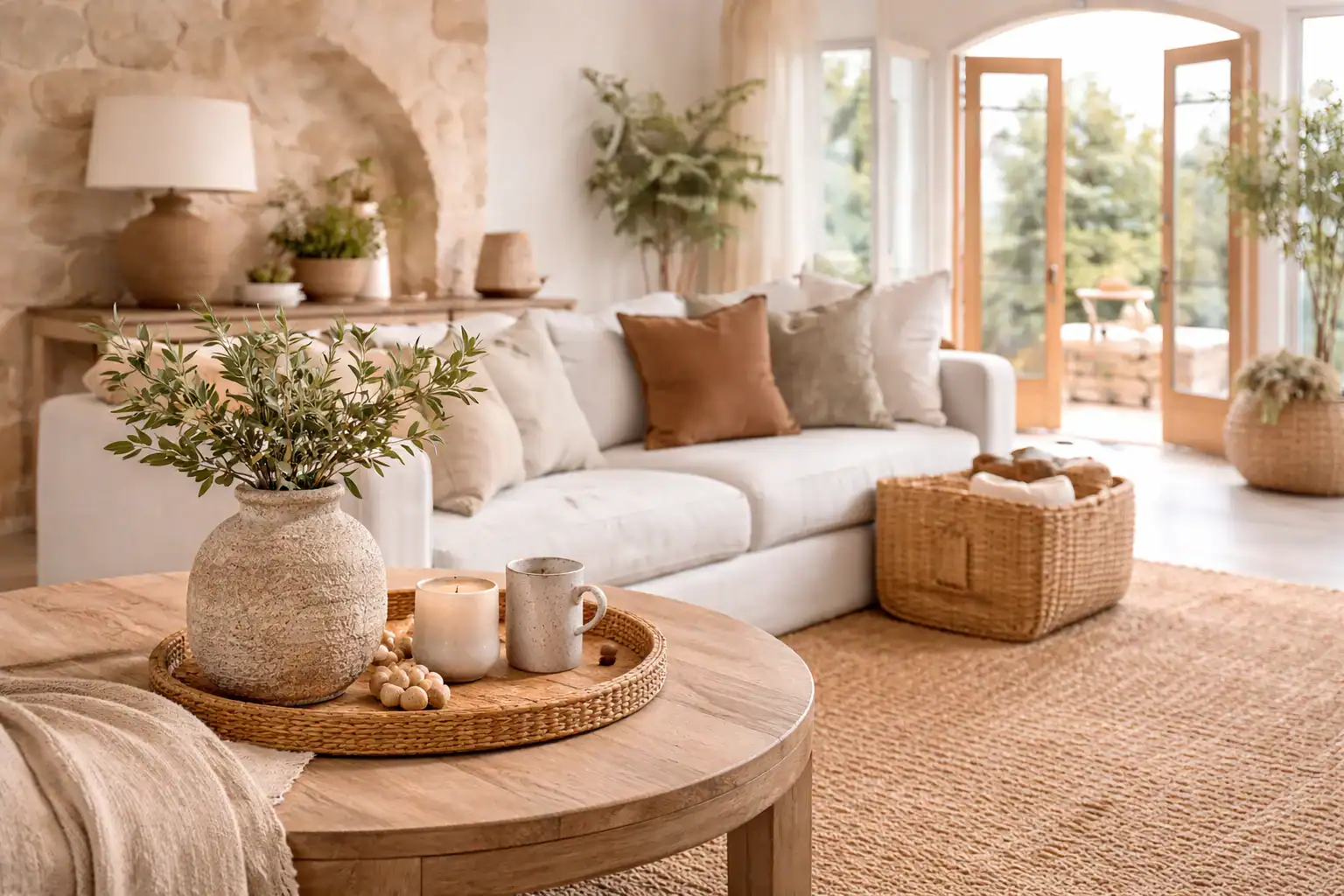
Some rooms feel styled. Others feel lived in. The difference often comes down to texture. Linen that softens the light, wood that shows small marks of time, and stone that holds a quiet weight in the room. In Mediterranean homes, these materials don’t perform for the eye alone — they settle into daily life.
Linen wood stone textures
Linen brings a kind of visual breathing room. It doesn’t shine or draw attention, but it changes with the light, softening corners and giving space to small, ordinary moments. A linen cushion shifts as you sit. Curtains move with a breeze. The fabric feels present without asking to be noticed.
Wood carries memory in its surface. A table that isn’t perfectly smooth, a shelf with softened edges, a door frame touched by hands over years — these details quietly ground a space. Wood doesn’t need to look new to feel right. In Mediterranean rooms, it often looks better when it carries subtle signs of use.
Stone adds weight without heaviness. A stone vase, a simple tray, or a wall that holds its texture under soft light creates a sense of permanence. Stone doesn’t rush the room. It slows the pace of how a space is read, giving the eye somewhere steady to rest.
Together, these textures create rooms that don’t feel staged. They feel inhabited. Light moves differently across linen than across stone. Wood absorbs warmth. The room gains depth without needing decoration to work too hard. The effect is calm, layered, and quietly tactile.
If you’ve explored how natural materials ground spaces in Natural Fiber Rugs — How to Choose Jute, Sisal and Wool, these textures work in the same way at eye level and in everyday touch points, adding softness and balance across the room. For a broader look at how Mediterranean interiors embrace natural materials, light and everyday textures, this Apartment Therapy guide on Mediterranean-style interior design offers a gentle, inspirational perspective.
When rooms are shaped by linen, wood and stone, they don’t need to announce their style. They feel real because they are made for living — changing slightly with time, light, and the quiet rhythm of daily use.