
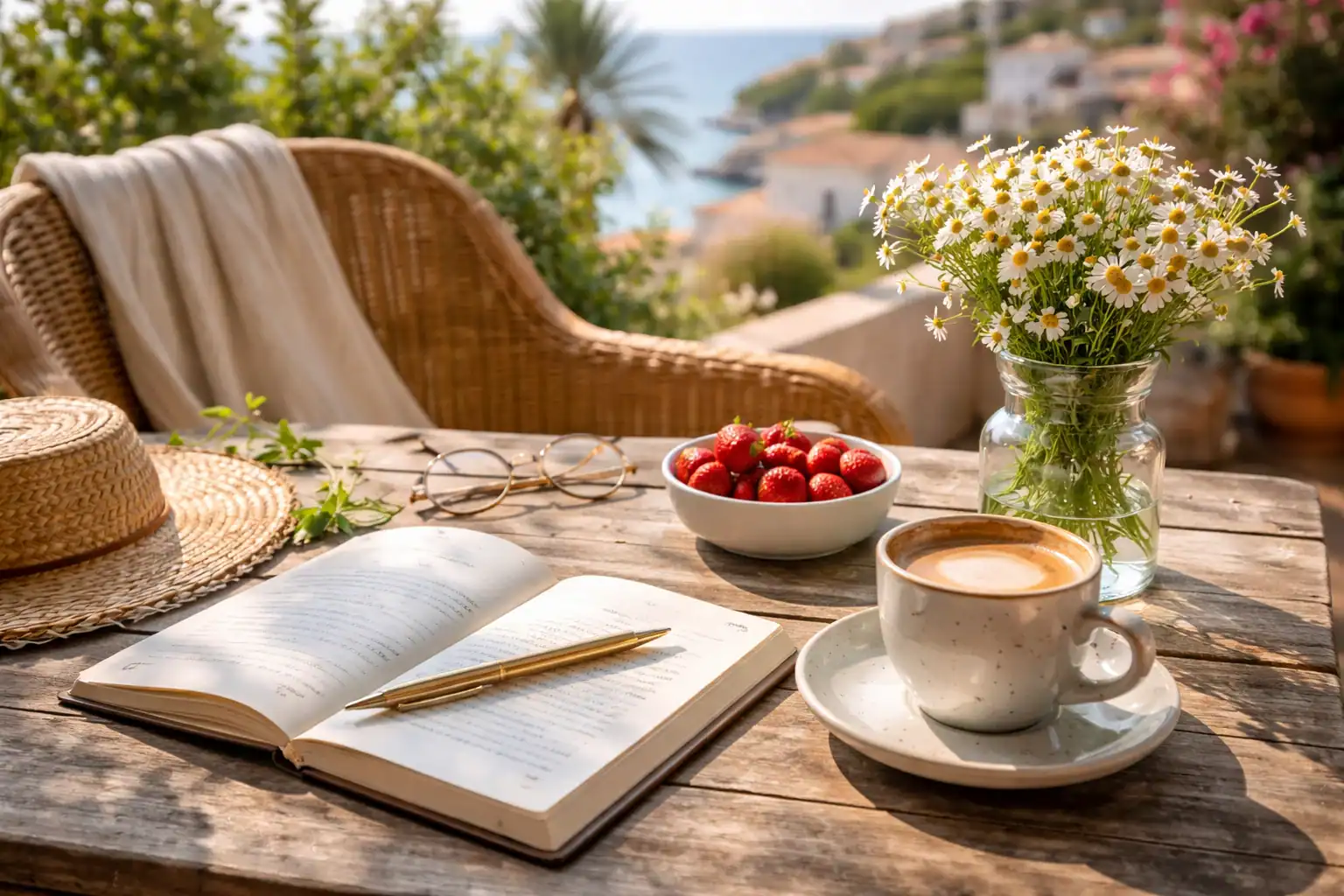
Mediterranean daily life in spring does not usually change all at once. The season appears gradually. A window stays open longer. Coffee moves outside. Markets begin to look different. A walk that felt cold or inconvenient a few weeks earlier becomes an easy part of the day again.
What I like about Mediterranean spring is that the change often feels practical rather than ceremonial. Nobody needs to announce that a new season has begun. You notice it because the house, the food, the streets and the hours outside start working differently.
The exact timing varies enormously across the region. March on a Greek island does not feel the same as April in southern Spain or May on the Croatian coast. But in many Mediterranean places, spring creates a recognizable transition between the enclosed rhythm of winter and the hotter, more protected rhythm of summer.
Mornings Begin Moving Outside Again
One of the clearest changes is the morning.
During colder months, breakfast and coffee naturally stay indoors more often. As spring settles in, a balcony, doorstep, terrace or sunny corner becomes comfortable again.
The shift can be very small. You might drink the first coffee beside an open window instead of at the kitchen table. A café puts out a few more chairs. Someone waters plants before leaving home. Breakfast lasts ten minutes longer because the air outside finally feels pleasant.
This is also when the relationship with morning light changes. The day begins earlier, rooms brighten sooner and it becomes easier to use natural light before switching on every lamp in the house.
Our guide to the Mediterranean morning routine in warmer months looks more closely at how breakfast, light, fresh air and the first part of the day change once warmer weather becomes reliable.
Windows and Doors Stay Open Longer
Spring often enters the home through air before anything else.
A window that was opened briefly in winter may stay open through breakfast. Balcony doors remain open while the room is cleaned. Shutters begin to manage sunlight rather than simply protect the house from colder weather.
The home starts interacting with the street again. You hear conversations, birds, deliveries, scooters, church bells or activity from nearby cafés. The boundary between indoors and outdoors feels slightly less fixed.
This does not mean Mediterranean homes are permanently open to perfect weather. Spring can still bring rain, wind and surprisingly cool evenings. The difference is that opening the house becomes possible more often.
That everyday relationship between interior space and the world outside is explored further in Living With Open Windows — Air, Sound and Calm in Mediterranean Homes.
Markets Begin to Look Different
Seasonal change becomes especially visible around food.
Spring markets gradually introduce different colors and textures. In Mediterranean-climate areas of the EU, spring produce can include strawberries, citrus, cherries and apricots, together with vegetables such as artichokes, asparagus, spinach, peas, broad beans and green onions.
The European Commission’s fruit and vegetable seasonal calendar gives a useful overview of produce associated with Mediterranean, temperate and oceanic climates.
Of course, what appears at a particular market depends on location, altitude, weather and local agriculture. The interesting part is not following a perfect list. It is noticing that the market itself begins telling you the season has changed.
Meals Often Become Lighter Without Becoming Small
The kitchen tends to change with the market.
Heavy winter dishes do not necessarily disappear, but lighter combinations become easier to build: vegetables with olive oil, eggs with greens, fish with herbs and lemon, bread with cheese, beans with fresh vegetables or fruit served simply at the end of a meal.
Spring food does not need to look like a carefully styled seasonal menu. Often it is simply the same familiar cooking becoming fresher because different ingredients are available.
I think this is one of the most natural parts of seasonal living. The meal changes because the ingredients change, not because someone has decided that every part of life needs a spring makeover.
Walking Becomes Easier Again
Spring can be one of the most comfortable periods for ordinary walking.
The stronger summer heat has not yet arrived, while daylight lasts longer than it did in winter. That makes short errands, neighborhood walks and time along the waterfront easier to fit into the day.
A trip to the bakery can become a slightly longer route home. An afternoon coffee can include a walk through a square. Instead of driving between every stop, it may feel natural to connect several small errands on foot.
This is not necessarily exercise in the formal sense. It is simply movement returning to daily routines because being outside feels easier.
Café Tables Return to Public Life
Cafés are another visible marker of Mediterranean spring.
A terrace that felt empty or exposed in winter begins filling again. People choose outdoor tables at lunchtime. Friends stay longer because the temperature is comfortable. The street becomes part of the café rather than something viewed through glass.
Spring is especially interesting because this can happen before the intensity of peak summer tourism. In some towns, the outdoor café still feels closely connected to neighborhood life and the working day.
Our article on how Mediterranean cafés shape social life in spring looks more closely at that transition and the way terraces reconnect cafés with streets, squares and local routines.
Balconies and Terraces Become Useful Spaces Again
A balcony does not need to become an outdoor living room to matter.
Spring may simply mean using it again.
A chair moves outside. Herbs return to the railing. Laundry dries more easily. Someone eats breakfast there on a warm morning or sits outside for ten minutes before dinner.
That distinction is important. Mediterranean outdoor living is often less about elaborate design and more about making use of whatever outside space is available.
A small balcony, courtyard, doorstep or shared terrace can become part of daily life again once the weather allows it.
Home Changes Can Stay Small
Spring does not require redesigning the house.
Often the most noticeable changes are practical:
- heavier blankets are put away;
- windows stay open longer;
- fresh flowers or herbs appear inside;
- lighter fabrics replace heavier ones;
- balconies and terraces are cleaned after winter;
- bowls of seasonal fruit return to the table;
- natural light is used for more of the day.
These are ordinary responses to weather and light, not decorating rules.
That is also why I would not treat Mediterranean spring as an aesthetic that has to be recreated. It makes more sense as a series of useful seasonal adjustments.
Errands Begin to Feel Less Like Tasks
Weather changes the experience of ordinary chores.
A market trip in cold rain can feel purely functional. The same route on a mild spring morning can include coffee, a short conversation or an extra walk through the neighborhood.
People still need groceries, bread, medication and household items. The errands themselves do not change. What changes is the amount of life that can happen around them.
That small difference matters because everyday Mediterranean life is not built only around leisure. Much of its atmosphere comes from ordinary things happening in public: shopping, walking, eating, meeting someone unexpectedly or stopping briefly at a café.
Afternoons Become More Flexible
Winter often narrows the comfortable part of the day. Spring opens it again.
A late lunch can lead to a walk. A few hours outside do not necessarily require planning around extreme heat. A café stop can happen at four rather than becoming an escape from uncomfortable weather.
As the season advances, that flexibility gradually changes again. By summer, the strongest part of the afternoon may encourage more shade, rest and indoor time.
Spring sits between those two rhythms, which is part of what makes it distinctive.
Evenings Move Outside Before Summer Arrives
The evening may be the most noticeable change of all.
People linger outside after finishing work. Children remain in squares a little longer. A walk after dinner becomes comfortable again. Restaurants and cafés rely more heavily on outdoor seating.
The important change is not necessarily nightlife. It is the return of ordinary social time outside.
You can sit somewhere without feeling that the day has already ended. A short walk, a conversation or a drink can occupy the space between work and dinner without needing to become an event.
Spring Does Not Feel the Same Everywhere
It is easy to talk about “Mediterranean spring” as though the entire region shares one climate.
It does not.
The Mediterranean covers islands, coastal cities, mountains, inland regions and different latitudes. One place may already feel warm enough for outdoor dinners while another still has cold mornings and unsettled weather.
Even within the same destination, March and late May can feel like completely different seasons.
That variation is part of the experience. Spring is not one temperature or one date. It is a gradual movement toward longer days and more life outside.
The Best Spring Habits Are Usually the Ones You Do Not Have to Force
You do not need to adopt a new routine simply because the season has changed.
The most believable spring habits tend to appear because conditions make them convenient.
You walk because the weather is pleasant. You open the window because the air feels good. You eat strawberries because they have appeared at the market. You sit outside because the table is finally warm enough.
Those small adjustments are easier to keep because they belong to the day that is actually happening.
Mediterranean Spring Is a Change of Rhythm More Than a Reset
There is no need for a dramatic seasonal transformation.
Mediterranean daily life in spring changes through ordinary decisions: opening the house, walking a little farther, choosing what has arrived at the market, sitting outside for coffee and allowing evenings to stretch beyond the front door again.
Some days will still feel like winter. Others will suddenly feel almost like summer. The season moves between the two.
That uncertainty is part of spring. What makes it memorable is not a perfect temperature or a carefully planned routine, but the gradual return of air, light, fresh food and everyday life outdoors.