
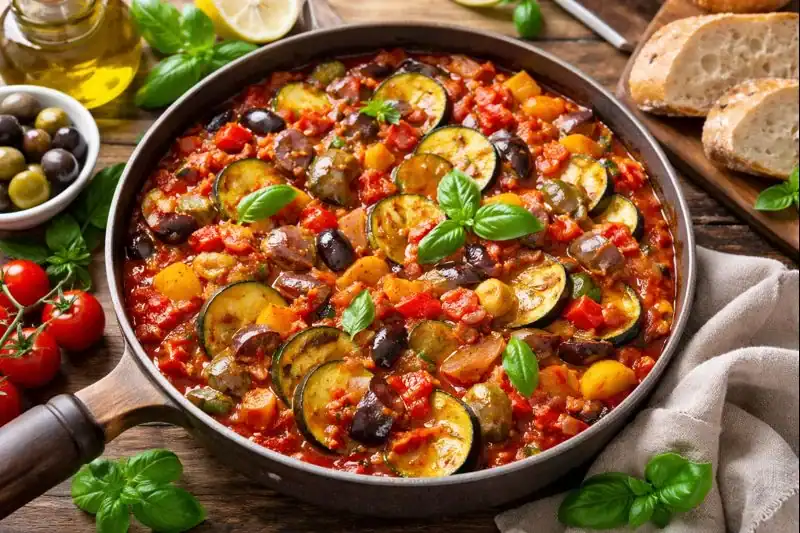
Vegetable ratatouille with olive oil is not a difficult dish, but it does ask for a little patience. The vegetables need time to soften, the tomato juices need time to reduce, and the olive oil needs time to pull everything together without turning the pan into a watery stew.
Slow-cooked vegetables that still keep their shape
The best ratatouille is soft and generous, but not flat. The zucchini, eggplant, peppers and tomatoes should become tender enough to share their flavor, while still keeping enough texture to feel like real vegetables on the fork.
This is different from olive oil braised vegetables, which lean more Greek briam-style and often feel more oven-braised. Ratatouille stays closer to the French Riviera table: a pan of summer vegetables, garlic, olive oil, herbs and time.
Recipe
Prep time: 20 minutes
Cook time: 1 hour
Total time: 1 hour 20 minutes
Servings: 4
Calories: about 220 kcal per serving
Ingredients
- 1 medium eggplant, diced
- 2 medium zucchini, sliced into half-moons
- 1 red bell pepper, diced
- 1 yellow bell pepper, diced
- 1 large onion, chopped
- 3 garlic cloves, minced
- 3 cups chopped ripe tomatoes, or 1 can / 400 g crushed tomatoes
- 1/4 cup extra virgin olive oil, divided
- 1 tablespoon tomato paste, optional
- 1 teaspoon herbes de Provence or dried thyme
- 1 bay leaf, optional
- Salt and black pepper, to taste
- Fresh basil or parsley, for serving
How to Make Vegetable Ratatouille with Olive Oil
1. Prepare the vegetables
Cut the eggplant, zucchini, peppers and onion before you start cooking. Try to keep the pieces similar in size, so they soften at a similar pace.
If the eggplant is very large or seedy, sprinkle it lightly with salt and let it sit for 15 minutes, then pat it dry. This is optional, but it can help the texture.
2. Start with onion and eggplant
Warm 2 tablespoons olive oil in a wide pan over medium heat. Add the onion and cook for 5 minutes, until it begins to soften. Add the eggplant and cook for 8–10 minutes, stirring often, until it starts to relax and take on some color.
3. Add peppers and zucchini
Add the peppers, zucchini, salt and black pepper. Cook for another 8–10 minutes. The vegetables should begin to soften, but they do not need to collapse yet.
4. Add tomato and herbs
Stir in the garlic and tomato paste, if using, and cook for 1 minute. Add the tomatoes, herbes de Provence or thyme, bay leaf if using, and the remaining olive oil.
5. Simmer slowly
Lower the heat and let the ratatouille simmer uncovered for 35–45 minutes, stirring now and then. Keep it gentle. If the pan looks dry, add a small splash of water. If it looks too watery, keep cooking uncovered until the juices reduce.
6. Rest before serving
Turn off the heat and let the ratatouille sit for 10 minutes. This small rest helps the vegetables settle and makes the olive oil and tomato juices taste more rounded. Remove the bay leaf, taste, and adjust with salt and pepper.
7. Finish with herbs
Add fresh basil or parsley just before serving. Serve warm, at room temperature or even slightly chilled the next day.
Texture Tips
Use a wide pan if you can. A crowded pot traps steam and makes the vegetables softer before the juices have time to reduce.
Do not rush the tomato stage. Ratatouille needs time for the tomatoes to cook down into the vegetables instead of sitting around them as thin liquid.
Keep the heat gentle. High heat can make the bottom catch before the vegetables are tender.
Let it rest before serving. Ratatouille often tastes better after 10 minutes on the counter, and leftovers can taste even better the next day.
What to Serve with Ratatouille
Ratatouille can be a simple main with bread, couscous, rice or a green salad. It also works as a side with fish, chicken, eggs or roasted potatoes.
For a larger Mediterranean table, serve it with Mediterranean baked chicken thighs with olives and oregano. The ratatouille brings softness and vegetables, while the chicken brings a warmer oven-roasted center to the meal.
For something lighter, spoon ratatouille beside lemon herb couscous salad. The couscous keeps the plate fresh and catches the olive oil and tomato juices without making the meal heavy.
Make-Ahead and Leftovers
Ratatouille is very good made ahead. Keep it in a covered container in the fridge for up to 3 days.
Serve leftovers cold, room temperature or gently reheated. Add fresh herbs after reheating, not before storing.
You can also spoon leftovers over toast, fold them into eggs, serve them with pasta, or use them as a simple vegetable layer beside rice or grains.
The dish belongs naturally to Provençal cooking, where summer vegetables, olive oil and herbs do much of the work. For a simple French reference point, France.fr’s ratatouille from Provence keeps the dish tied to that Riviera and Provence feeling without turning it into something complicated.