
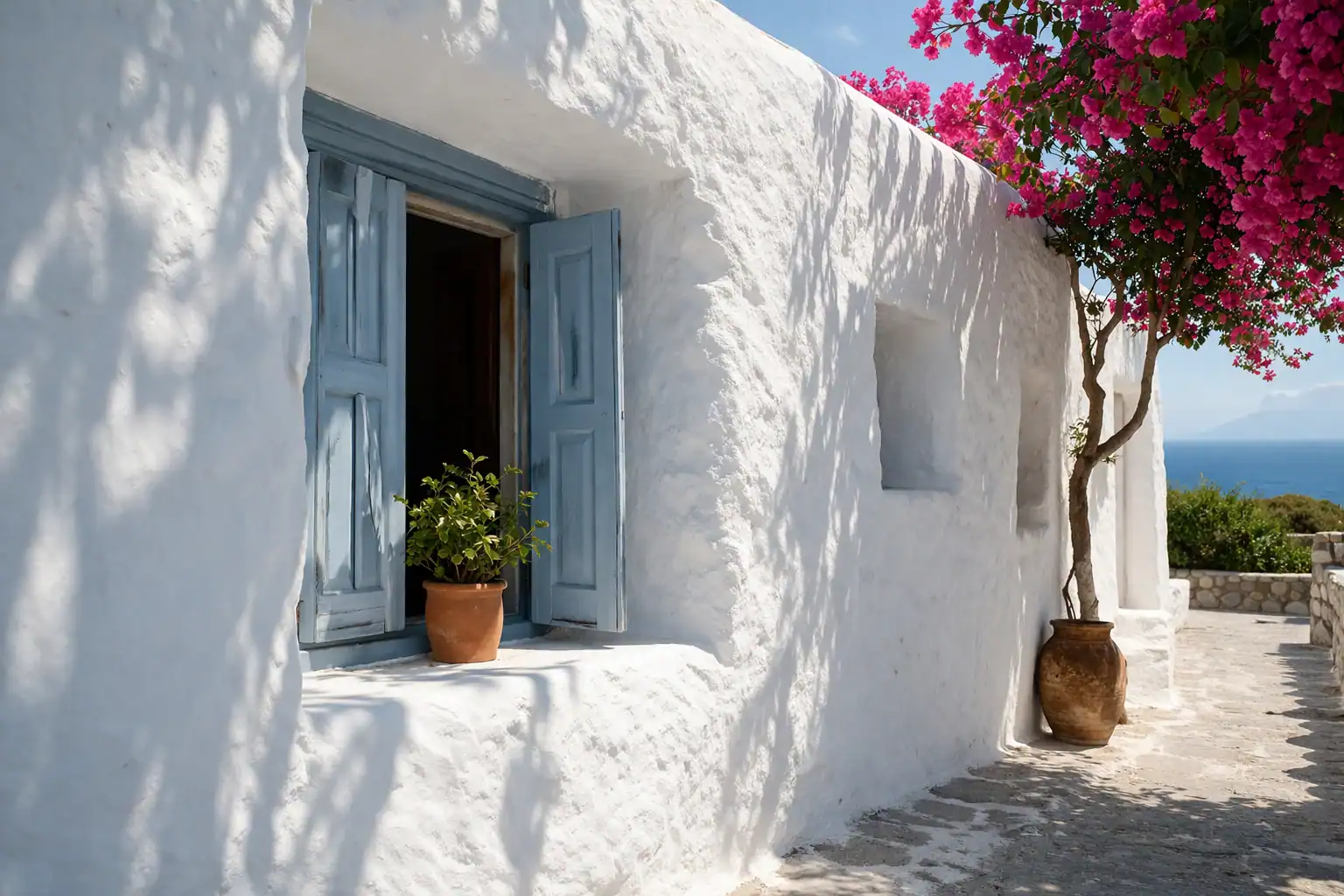
If you walk through older Mediterranean towns in summer, one thing becomes clear very quickly: the heat outside does not always match the feeling inside. Even on very warm days, interiors often stay noticeably cooler. A big part of that comes down to one simple detail — thick walls.
Why mediterranean homes use thick walls
Thick walls work as a natural barrier between outside heat and indoor space. Instead of letting heat pass quickly into the house, they slow everything down. During the day, when the sun is strongest, the outer layer of the wall absorbs heat, but it takes many hours for that warmth to move all the way through to the inside.
This delay is what makes the system effective. By the time heat would normally reach the interior, the outside temperature is already starting to drop. In many cases, the wall never fully transfers that heat indoors, which helps keep rooms more stable throughout the day.
Material also plays an important role. Traditional Mediterranean homes are often built with stone, thick plaster or masonry. These materials have high thermal mass, meaning they can absorb and store heat without quickly releasing it inside. Instead of overheating the space, they regulate temperature slowly and predictably.
Another detail you often notice is the depth of windows and door openings. Thick walls naturally create recessed openings, which reduce direct sunlight entering the interior. This helps limit how much heat gets inside during peak hours, especially in rooms facing strong sun exposure.
Ventilation works together with wall thickness. Many Mediterranean homes are designed to be aired early in the morning and later in the evening. The thick walls help maintain that cooler air during the day, reducing the need for constant airflow or artificial cooling.
This type of construction is not about decoration or style. It is a practical response to climate. In regions with long, hot summers, buildings are designed to slow down heat, not fight it directly. Thick walls are one of the simplest and most effective ways to do that.
You can see how this logic connects with other elements of Mediterranean homes, like Mediterranean Window Shutters – Why They Matter Before Summer and the broader material choices explained in Mediterranean Stone Floors – Why They Feel Right in Warm Weather. For a technical perspective on thermal mass and passive cooling, the U.S. Department of Energy guide on thermal mass offers a clear explanation of how these materials behave in hot climates.
In the end, thick walls are not just a traditional detail. They are a practical solution developed over time, helping homes stay cooler, more stable and more comfortable during Mediterranean summers.