
Mediterranean living has always been rooted in rhythm — rhythm of sunlight, tides, plants and seasons. Before supermarkets and global shipping, households ate what nature offered at its peak. Today, seasonal eating is not only a tradition; it’s also one of the simplest, most joyful ways to live more sustainably.
When produce is at its natural peak, flavor is richer, nutrients are higher and sourcing is kinder to the land. Markets feel more alive — baskets of figs in late summer, citrus glowing in winter, tomatoes warm from the sun in July.
Why Seasonal Eating Matters
Choosing what’s in season is a small decision with big impact. It supports local farmers, reduces transportation emissions, makes meals more affordable and reconnects us with the way Mediterranean food was always meant to be enjoyed — simple, fresh, and rooted in place.
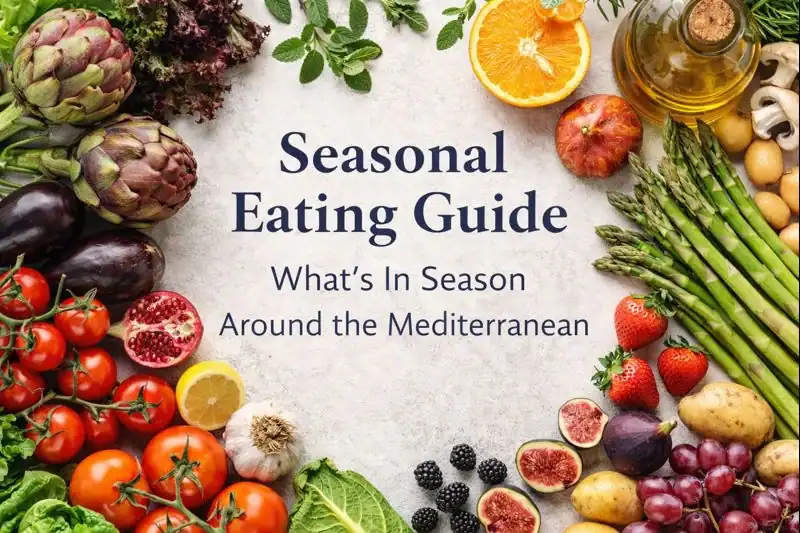
Seasonal Eating Guide — What’s In Season Around the Mediterranean (By Season)
🌸 Spring (March–May):
Artichokes, asparagus, peas, lettuce, radishes, strawberries, apricots, lemons.
Spring is crisp and green — ideal for salads, steamed vegetables, light plates and picnics outdoors.
☀️ Summer (June–August):
Tomatoes, zucchini, eggplant, peppers, cucumbers, watermelon, figs, peaches, grapes.
This is the season of abundance — cold plates, no-cook meals, grilled vegetables, bowls of fresh fruit in the afternoon sun.
🍂 Autumn (September–November):
Pomegranates, apples, mushrooms, potatoes, pumpkins, grapes (late), persimmons.
Warm meals return — stews, roasted vegetables, soups and bread dipped in new-season olive oil.
❄️ Winter (December–February):
Citrus (oranges, tangerines), fennel, cabbage, leeks, cauliflower, beets.
Simple, comforting plates — soups, braised greens, citrus-forward salads to brighten short days.
How to Make It a Habit
Seasonal eating becomes easy once you let the market guide you. Instead of deciding on a recipe first — visit your local stall, see what’s shining, then cook around it. It creates less pressure, more joy, and helps meals feel like part of the landscape you’re living in.
If you love ideas that make everyday life feel calmer and more rooted — habits like those in Eco-Friendly Coastal Living — Daily Habits from Seaside Villages — seasonal eating fits beautifully into a slower rhythm. For a deeper reference on what’s in season each month, you can explore the Mediterranean food seasonality chart published by Mediterranean Diet Foundation online.