
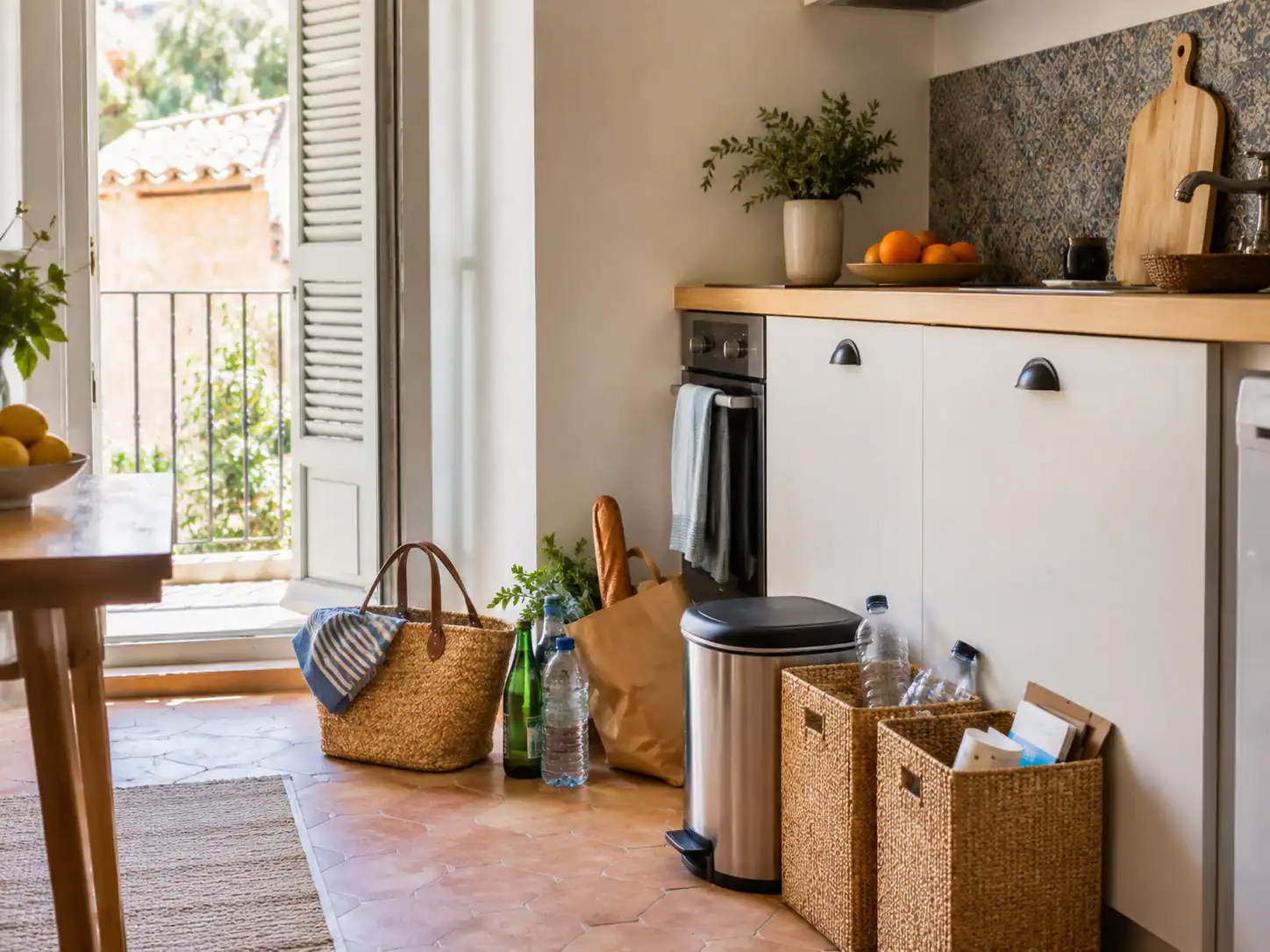
A small Mediterranean rental apartment can look easy on the first evening. Then the water bottles, fruit peels, bread paper, yogurt cups, beach snacks and supermarket bags start to collect on the counter. In a small kitchen, rubbish becomes visible very quickly.
The easiest rental apartments are the ones where waste has a place from the first day.
This is not about being perfect. It is about not letting a simple stay turn messy because nobody checked where the bins are, what gets recycled, or what should leave the apartment before the last morning.
Check the bin situation before you fully unpack
Before you spread bags across the room, look for the basic waste setup. Many rental apartments have one small kitchen bin and not much else. Others have separate bags under the sink, a balcony corner, or instructions near the door.
The useful first check is simple. Where does everyday rubbish go? Is there a separate place for glass, paper, plastic or cans? Are there spare bags? Is the outside bin in the building, on the street, behind a gate, or somewhere you need to ask about?
This belongs in the same first-hour check as water, windows, fridge and keys. Our guide to Mediterranean rental apartment tips explains why the first hour in a rental matters more than the listing photos.
Do not wait until the bag is full
In a normal home, a full kitchen bin may not be a big problem. In a small summer rental, it can become annoying by the second evening. Heat, fruit skins, seafood wrappers, coffee grounds and damp packaging do not need much time to smell.
A small bag taken out early is easier than a full bag taken out late. This matters even more if the apartment has no strong ventilation, no balcony, or only a tiny bin under the sink.
The best habit is not complicated: use smaller bags, tie them before they become heavy, and take them out when you are already leaving for a walk, beach shower, shop or dinner.
Keep recycling simple and local
Recycling systems change from country to country, and sometimes from town to town. The colors, signs and collection points may not match what you use at home. That is normal.
Look for the local pattern instead of guessing too much. Glass may have its own street container. Paper may be separate. Plastic and cans may go together in some places and not in others. If there are signs on the outside bins, follow those before following habits from home.
For a broader reference on how waste and recycling fit into European waste policy, the European Commission waste and recycling overview is a useful neutral source.
In a rental, the practical goal is modest: separate the obvious things when the system is clear, avoid mixing food waste into clean recycling, and do not leave a pile of “maybe recyclable” packaging for the cleaner to solve.
Watch the first supermarket shop
The first supermarket shop creates most of the early waste: water bottles, receipts, fruit stickers, plastic wrap, bakery paper, yogurt pots, snack packets, bags and boxes.
This is one reason the first shop should stay small. Buy what helps the first 24 hours, not everything that looks useful. Water, breakfast, one easy meal and a few basics are usually enough. Our guide to the first supermarket shop after arriving in a Mediterranean town keeps that first basket realistic for a small rental kitchen.
Smaller shopping also means smaller waste. You do not need to manage a week of packaging before you even understand the apartment.
Keep one “leaving bag” near the door
A small habit helps a lot: keep one bag near the door for rubbish that should leave the apartment on the next walk. Not food scraps loose in a pretty basket, not open packaging on the counter, just one practical bag that is ready to go.
This works especially well for beach days. You come back with empty water bottles, receipts, snack wrappers, sandy paper and maybe a damp bag. If everything lands on the kitchen table, the apartment feels messy fast. If it goes into one leaving bag, it disappears on the next trip downstairs.
Keep this bag separate from clean market bags or reusable totes. Otherwise the apartment becomes a quiet pile of almost-empty bags with no clear job.
Be careful with glass
Glass bottles are common in Mediterranean towns: water, beer, wine, olive oil, soda, jars. They can be easy to recycle, but they can also become noisy and awkward in a small apartment.
Do not leave several glass bottles rolling under the sink or beside the fridge. Rinse sticky bottles if they will sit for a day. Put them upright in one corner. Take them to the glass container when you pass one, especially if the apartment is on an upper floor with narrow stairs.
If the building has quiet hours or thin walls, avoid carrying glass down late at night. It is a small courtesy, but small courtesies matter in shared buildings.
Food scraps need speed, not drama
Food scraps are usually the first thing to make a small kitchen unpleasant. Melon rind, tomato ends, fish paper, cheese wrappers, olive pits, coffee grounds and wet salad leaves do not need to sit indoors for long.
If there is no clear compost system, do not invent one in the rental. Use a small bag, close it well, and take it out sooner. Keep wet scraps away from paper recycling. Wipe the bin lid if it gets sticky. Rinse the sink area before leaving for the evening.
A rental kitchen does not need a perfect system. It needs a clean enough rhythm.
Do not leave the last morning dirty
The last morning is when rubbish becomes stressful. You are packing, checking drawers, trying not to miss the bus, and suddenly the kitchen has a full bin, bottles near the door, food in the fridge and three small bags nobody knows what to do with.
Avoid that by doing a small reset the evening before checkout. Take out the main rubbish. Empty obvious recycling. Throw away food you will not eat. Leave only breakfast rubbish for the morning.
This also helps the apartment feel better when you leave. It is not only polite to the host or cleaner. It makes your own departure calmer.
What to avoid in a small rental
Do not leave tied rubbish bags on a balcony in strong sun. Do not hide food waste under the sink and forget it. Do not mix broken glass with soft rubbish. Do not fill the apartment bin until the lid no longer closes. Do not leave all recycling beside the door as if someone else will automatically sort it.
Most of these mistakes happen because the apartment feels temporary. But temporary spaces still need small routines.
A cleaner stay starts with one small check
Bins and recycling are not the beautiful part of Mediterranean travel. They are not the sea view, the bakery queue, the first coffee or the evening walk. But they shape how a small apartment feels after two days.
A little attention early makes the whole stay easier. Find the bin. Notice the recycling point. Keep one leaving bag. Take food waste out before it becomes a problem. Leave the kitchen better than a rushed traveler would.
That is enough. A good rental stay does not need a perfect system. It needs small practical habits that keep the space easy to live in.