
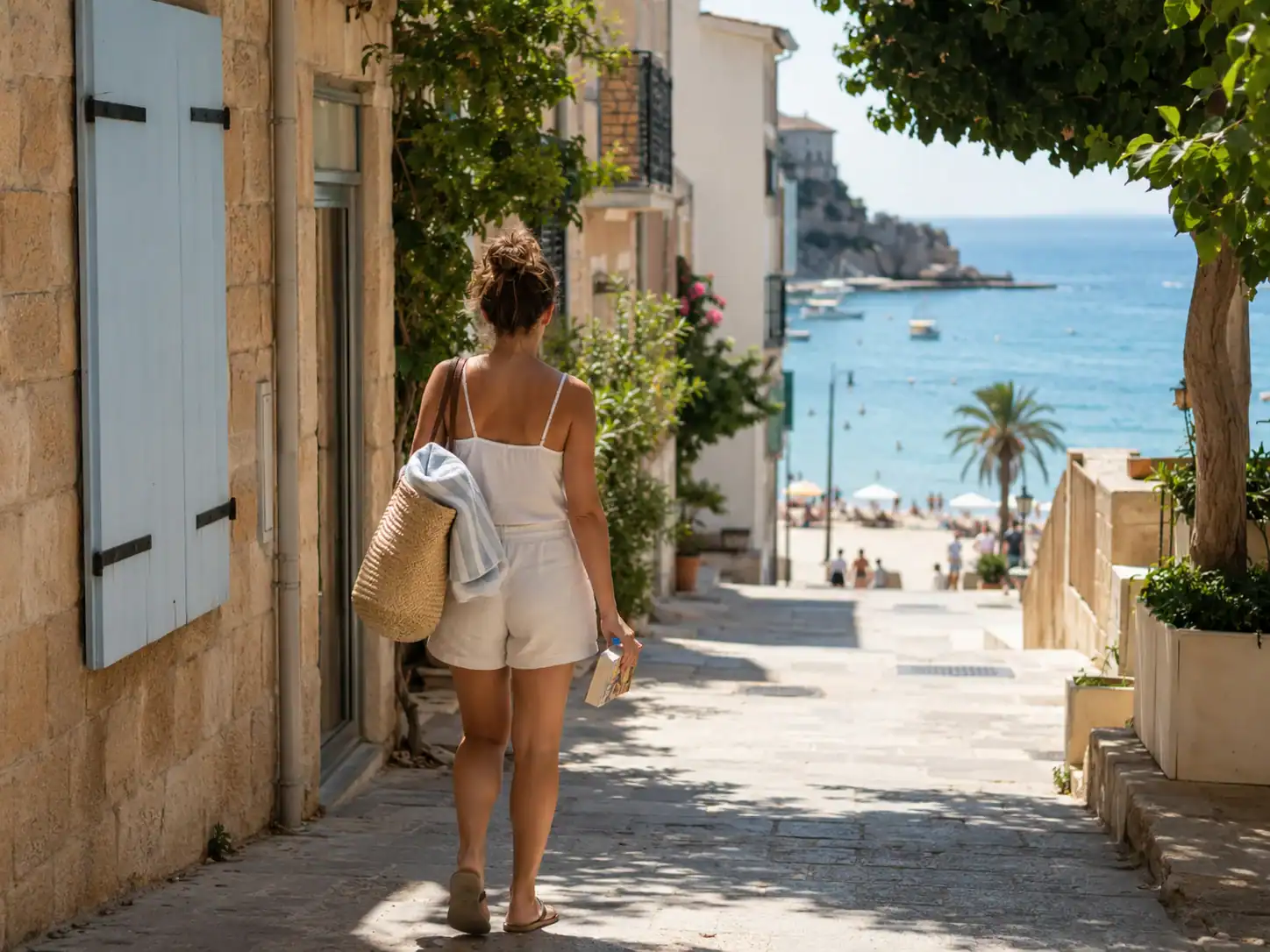
Walking to the beach in a Mediterranean town sounds simple until the way back reminds you what you carried. The sea may be close on the map, but the return can involve hot pavement, stairs, sand on your feet, a wet towel, a bus stop that is not near the beach, or a narrow street that feels longer in the afternoon than it did in the morning.
The beach bag should respect the walk back
A short beach stop does not need the same bag as a full day on the sand. That is the first useful difference. If you are going for one swim, one hour of shade, a little reading and a slow walk back into town, you do not need to pack as if you are moving to the beach for the day.
The problem is not only the weight. It is the way every object changes after the swim. A dry towel becomes damp. A light shirt picks up sand. A bottle of water gets warm. A book has to be protected. Keys and phone need a safe pocket. The bag that felt fine leaving the room can feel clumsy when you are tired, salty and trying to find the easiest route back.
This is why the return should decide the bag, not only the beach.
Before you add more things, think about the route back. Is there shade? Are there stairs? Do you need to reach a bus stop, ferry port or train station afterward? Is the beach below the town? Will you be walking through a busy promenade, a narrow old street or a longer road with no clear pause? These small details matter more than a perfect packing list.
A lighter beach walk is not about being extreme. It is about avoiding the kind of bag that makes the last twenty minutes of the day feel heavier than the swim was worth.
Water comes first. Not because the article needs to sound important, but because water is the one thing you notice quickly when you do not have it. A small bottle is usually better than assuming there will be a kiosk exactly where you want one. If there is a public drinking fountain on the route, even better, but do not build the whole plan around hope.
The towel is more personal. A very small towel sounds practical until you come out of the water and want to feel dry again. For me, a beach towel should still let you get back to comfortable skin quickly. The goal is less gear, not a miserable version of the beach.
So the better question is not “What is the smallest towel?” It is “What is the smallest towel I can actually enjoy using?”
A book, magazine or something to read also earns its place more often than people admit. Beach time can be beautiful, but it can also have empty stretches: waiting for shade, drying after a swim, sitting while someone else stays in the water, or taking a quiet pause before walking back. Something to read keeps the stop from turning into phone scrolling by default. It is small, useful and pleasant.
The rest should stay honest.
Keys, phone, sunglasses, a dry shirt or light cover-up, sandals that can handle hot ground, sunscreen if needed, and a small bag for any trash are usually enough for a short beach walk. If the beach has showers, toilets, cafés and easy access, you can keep things even simpler. If it is rocky, remote or harder to reach, the bag may need to change.
This is where local beach details matter. A town beach with public showers can make the transition back into the street much easier. You can rinse sand from your feet, cool off quickly and avoid carrying that gritty feeling into cafés, buses or apartment stairs. That is why public beach showers in Mediterranean summer travel are not just a nice extra. They can change the whole return from the beach.
For a longer stay, the lighter beach bag also depends on what happens later in the week. If clothes, towels and small beach pieces never get properly clean and dry again, the apartment starts to feel crowded fast. A simple plan for doing laundry during a longer Mediterranean stay can make packing light feel much easier.
The same is true for shade and pauses. Some beach routes are easy because you can stop under trees, sit on a low wall, refill water, or step into a side street before the sun feels too strong. Other routes are short but exposed. A ten-minute walk with no shade can feel longer than a twenty-minute walk with places to pause. For those days, Mediterranean summer walking tips become part of the beach plan, not a separate travel idea.
There is also a quiet sustainable side to packing less, but it does not need to be preached. When you carry fewer unnecessary things, you buy fewer last-minute items, use fewer throwaway bags, and leave less behind by accident. A small trash bag or empty pocket for wrappers is enough. The simple outdoor rule is still useful near the sea: take back what you brought, and do not leave small litter for someone else to solve. The Leave No Trace principle of packing out trash says the same thing in a clearer way.
The easiest short beach bag is not the emptiest one. It is the one that lets you enjoy the water, sit comfortably, read for a while, dry off properly and walk back without feeling trapped by your own things.
For a one- or two-hour beach stop, think in scenes rather than objects.
You leave the room.
You walk through town.
You swim.
You dry off.
You sit for a little while.
You rinse if there is a shower.
You walk back toward a café, bus stop, apartment or harbor.
Anything that helps those scenes deserves space. Anything that belongs to an imaginary full beach day can probably stay behind.
A Mediterranean beach day does not always need to take the whole day. Sometimes the best version is smaller: one swim, one proper towel, one bottle of water, one good thing to read, and an easy walk back before the bag starts to feel like a mistake. If you want that kind of lighter rhythm, spending a Mediterranean beach day without spending all day on the beach is often the better way to think about the whole plan.