
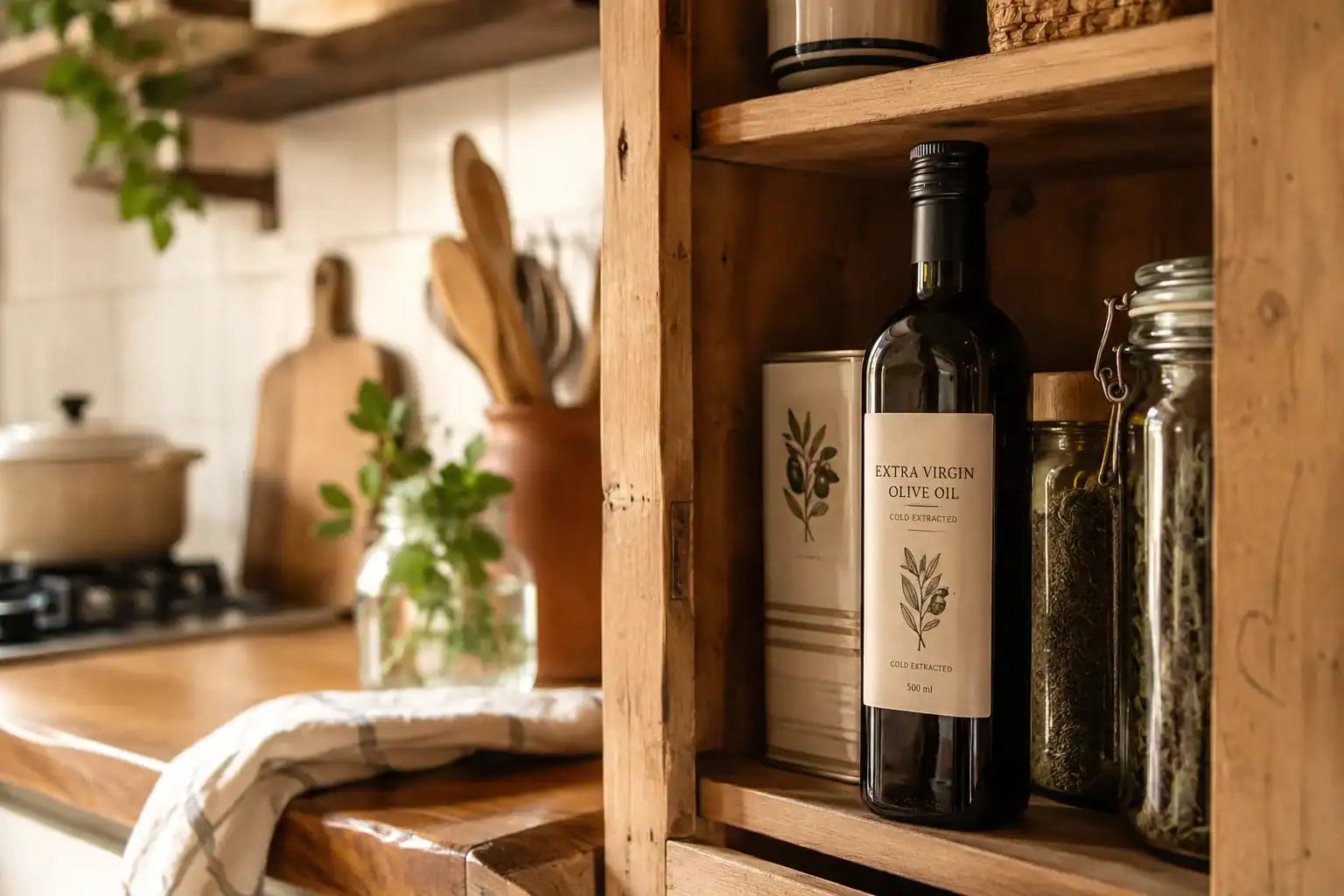
Buying olive oil is not only about choosing the best label. It is also about choosing a bottle you can actually finish while it still tastes good.
A large tin can look tempting because the price per liter is better. In a Mediterranean kitchen, that feels practical at first. Olive oil is used often, and nobody wants to pay more than necessary for a smaller bottle. But if your kitchen gets warm, if the bottle sits near the stove, or if you do not use it quickly enough, the cheaper choice can become expensive in another way.
Olive oil does not stay fresh forever. It can lose aroma, taste flat, and eventually become rancid, especially when it is exposed to heat, light and air. The problem is not that olive oil is difficult to keep. The problem is that many normal kitchens are built for convenience, not for storage.
The best solution is usually a compromise: buy enough olive oil to make sense for your cooking, but not so much that the last part waits for months in a warm cupboard.
Quick Answer
Store olive oil in a hot kitchen by keeping it sealed, away from the stove, away from direct light, and preferably inside a cupboard or drawer. Choose dark glass, tin or another protective container, and buy a size you can realistically use within a few months after opening. A smaller bottle kept in good conditions is often better than a large bargain bottle that sits too long in heat.
The Temptation of the Big Bottle
A bigger bottle or tin of olive oil often looks like the smart buy. The price is better, the label looks serious, and it feels useful to have enough oil for salads, vegetables, pasta, beans, fish and simple everyday meals.
That can be true if you cook with olive oil every day and use it fast. But it becomes less true when the bottle is too large for your real rhythm.
If you open a large container and then use it slowly, the oil spends more time exposed to air each time you open it. If the kitchen is warm, the problem becomes worse. If the container sits on the counter because it is too big for the cupboard, it gets even worse.
A good Mediterranean pantry is not about having the largest amount of everything. It is about having ingredients that are still good when you reach for them.
Buy the Amount You Actually Use
The most practical olive oil habit is to match the bottle to your real use.
If you use olive oil every day for cooking, dressing vegetables, finishing soups and making quick plates, a larger tin may make sense. But if you use it more slowly, a medium bottle is often the better choice. It may cost a little more per liter, but it protects you from wasting the last part.
This is especially true for extra virgin olive oil that you buy for flavor. A bottle with a grassy, peppery or fruity aroma is worth protecting. If it sits too long in a hot kitchen, the taste becomes dull before the bottle is finished.
This is also why reading the label matters before you buy. A fresh, well-packaged bottle gives you a better start. Our guide to Olive Oil 101: How to Read Labels and Avoid Common Marketing Traps explains what to look for on the shelf before you bring the oil home.
Keep It Out of the Light
Light is one of the easiest problems to avoid.
Do not keep olive oil on a sunny windowsill, open shelf or bright counter if you can avoid it. A beautiful bottle may look good beside the stove, but olive oil is not decoration. It keeps better when it is protected.
A cupboard, drawer or pantry shelf is usually better than the counter. Dark glass and tins help, but storage still matters. Even a dark bottle should not sit in a hot, bright place for weeks.
The simple rule is this: if the bottle looks pretty in the light, the oil may be paying the price.
Do Not Keep It Next to the Stove
The stove is convenient, but it is usually one of the worst places for olive oil.
Heat rises from the burners. The oven warms the nearby counter. Steam, sunlight and everyday cooking heat can make that corner of the kitchen much warmer than the rest of the room.
This does not mean you need a perfect pantry. Many small apartments and older Mediterranean-style kitchens do not have ideal storage. But even a small change helps. Move the bottle from beside the stove to a lower cupboard, a shaded shelf, or a drawer away from the oven.
If you want a small amount near the cooking area, keep only what you will use quickly in a small, sealed bottle. Leave the main bottle closed and stored away.
A Small Daily Bottle Can Work
Some people like using a small pour bottle because it is easier during cooking. That can work, but only if it is treated as a short-term bottle, not as the main storage place.
Use a small, clean, dark or opaque bottle if possible. Fill it with an amount you will use soon. Keep the cap closed. Do not leave it open with a loose pour spout for weeks.
The main supply should stay sealed, cool, dark and away from the stove. The small bottle is for convenience. The cupboard bottle is for freshness.
This is the same kind of practical thinking that makes everyday Mediterranean cooking feel natural. You do not need complicated systems. You need small habits that protect simple ingredients. For more ideas on how olive oil fits into daily meals, see Olive Oil for Everyday Mediterranean Meals.
What If Your Kitchen Is Always Warm?
Some kitchens are warm even when the stove is off. Top-floor apartments, west-facing rooms, small rentals, summer kitchens and homes without air conditioning can all make storage harder.
In that case, the bottle size matters even more. Do not buy more olive oil than you can use in a reasonable time. Choose a protected container. Keep it in the darkest, coolest place you have, even if that place is not perfect.
A lower cupboard is usually better than an upper shelf near the oven. A closed pantry is better than an open rack. A drawer away from sunlight can be better than a beautiful tray on the counter.
You are not trying to create laboratory conditions. You are trying to avoid the obvious enemies: heat, light and air. The International Olive Council explains that olive oil should be kept away from excess heat, air and especially light, which is exactly why a hot counter near the stove is rarely the best place for the bottle.
How to Tell If Olive Oil Has Gone Rancid
Rancid olive oil often smells tired, waxy, stale or a little like old nuts. Sometimes it tastes flat before it smells clearly bad. It may lose the fresh, green, fruity or peppery feeling that made it useful in the first place.
If you are not sure, taste a tiny amount on a spoon. Fresh olive oil should still have some life in it. It may be mild or strong depending on the type, but it should not taste greasy, dusty or dead.
Rancid olive oil usually will not improve a dish. It can make tomatoes taste dull, beans feel heavy and a simple salad seem oddly flat. When olive oil is used for flavor, freshness matters.
Do Not Save the Best Bottle Forever
One common mistake is saving a good bottle for special meals and then waiting too long to use it.
Olive oil is not wine. It does not become better because it sits in the kitchen. If you bought a good extra virgin olive oil, use it while it still tastes alive. Drizzle it over tomatoes, beans, grilled vegetables, soup, fish, bread or yogurt-based dishes. Let it do the job you bought it for.
The Mediterranean way is not always to save the best thing for later. Sometimes it is to use a good ingredient simply, while it is still good.
The Simple Rule That Works
The best olive oil storage rule is not complicated.
Buy a size that matches your real cooking. Keep it sealed. Keep it away from heat. Keep it away from light. Use it before it loses flavor.
A hot kitchen does not mean you cannot keep good olive oil. It just means you need to be a little honest about your habits. If you use a lot, buy more. If you use less, buy less. If the counter is hot, use the cupboard. If the big tin takes too long to finish, choose the medium bottle.
Good olive oil does not need perfect storage. But it does need protection from the things that quietly ruin it while it waits.