
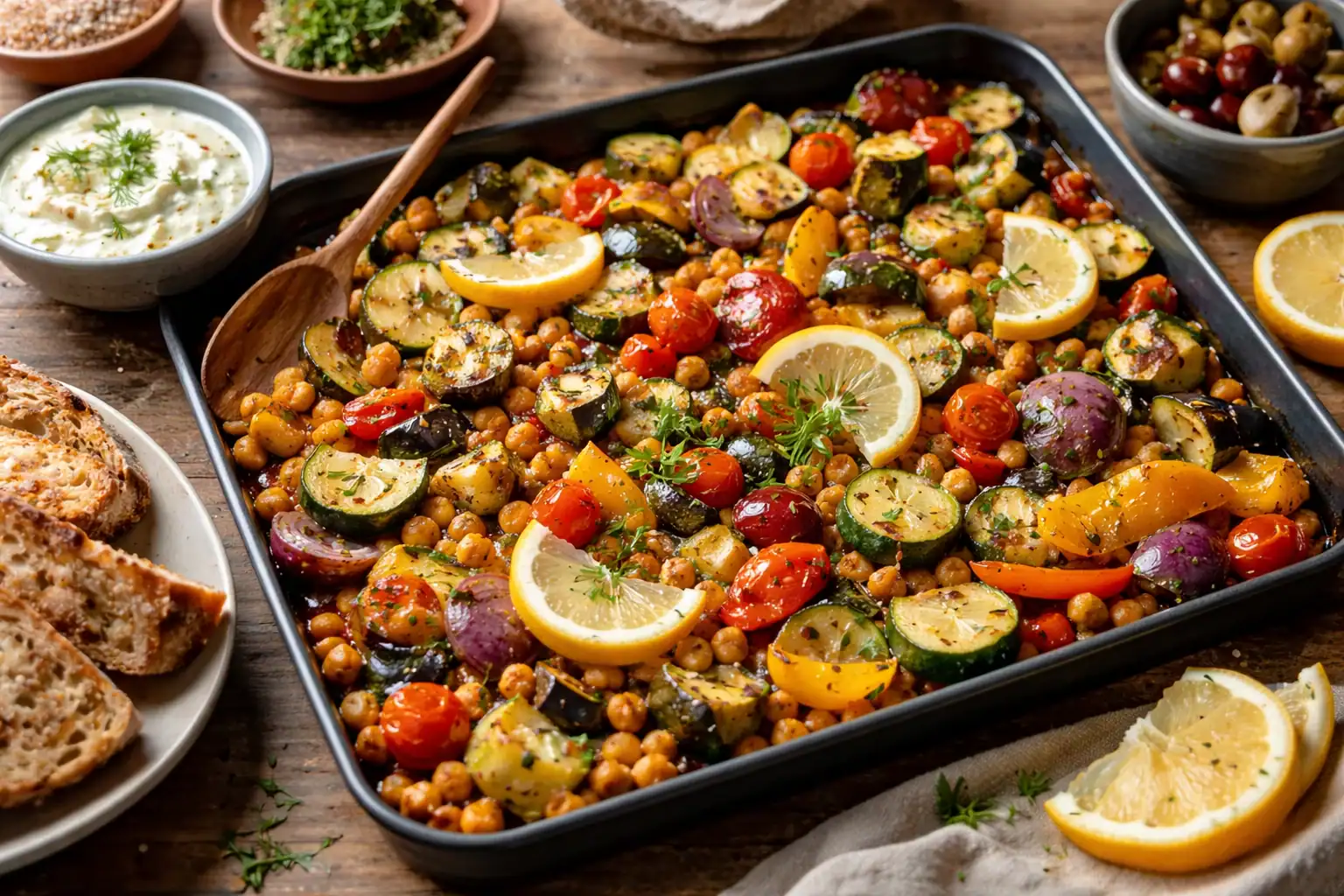
Lemon herb roasted vegetables with chickpeas are for the evenings when you want a warm dinner, but not a heavy one. You want something golden, filling and simple, with enough texture to feel like a real meal.
The chickpeas make the tray more satisfying, while the roasted vegetables bring sweetness and softness. Lemon, garlic and herbs keep everything bright, so the dish does not feel flat or tired after roasting.
This is the kind of Mediterranean main that works when you do not want to cook several separate things. One tray, a few good ingredients, and a fresh finish at the end.
Why This Lemon Herb Roasted Vegetable Tray Works
The balance is what makes this dish useful. The vegetables give sweetness, the chickpeas add substance, and the lemon-herb finish keeps the tray fresh instead of heavy.
Roasting is important because it concentrates the flavor. Zucchini, peppers, onion and tomatoes become softer and sweeter in the oven, while chickpeas turn slightly firmer at the edges.
The most important detail is not to add all the lemon too early. Lemon zest can go into the tray before roasting, but fresh lemon juice is best at the end, when it can lift the whole dish.
Lemon Herb Roasted Vegetables with Chickpeas
Ingredients
- 1 can chickpeas, drained and rinsed
- 1 zucchini, sliced into half-moons
- 1 red bell pepper, chopped
- 1 small red onion, sliced
- 1 cup cherry tomatoes, halved
- 2 tablespoons olive oil
- 3 garlic cloves, minced
- Zest of 1 lemon
- 1–2 tablespoons fresh lemon juice, to taste
- 1 teaspoon dried oregano
- 1/2 teaspoon dried thyme
- Salt and black pepper, to taste
- 2 tablespoons chopped parsley
- Optional: crumbled feta, olives or warm bread for serving
Instructions
- Preheat the oven to 425°F / 220°C.
- Pat the chickpeas dry with a towel so they roast better instead of steaming.
- Add the chickpeas, zucchini, red pepper, onion and cherry tomatoes to a large rimmed baking sheet.
- Drizzle with olive oil and add the garlic, lemon zest, oregano, thyme, salt and black pepper.
- Toss everything well, then spread the mixture into an even layer.
- Roast for 25–30 minutes, stirring once halfway through, until the vegetables are soft and lightly browned at the edges.
- Remove from the oven and add fresh lemon juice while the tray is still warm.
- Finish with chopped parsley and taste for salt, pepper and more lemon if needed.
- Serve warm, with feta, olives, bread, rice or couscous if you want a fuller meal.
Small Details That Make It Better
Dry the chickpeas before roasting. If they go into the oven wet, they steam and soften instead of getting lightly firm at the edges.
Use a large tray. Crowded vegetables release moisture and become soft before they have a chance to brown.
This post may contain affiliate links, including Amazon links. As an Amazon Associate, I earn from qualifying purchases, at no extra cost to you.
A large rimmed baking sheet helps the vegetables spread out properly, so they roast instead of steaming in a crowded pan.
Add the lemon in two stages. Lemon zest can roast with the vegetables, but fresh lemon juice should go on after the tray comes out of the oven.
Do not skip the parsley. It makes the tray taste fresher and more Mediterranean, especially after roasting.
What to Serve With It
This dish can be a vegetarian main on its own, especially because the chickpeas make it filling.
For a simple dinner, serve it with warm bread and a little feta or olives on the side.
If you want a more complete plate, add couscous, rice, bulgur or roasted potatoes.
For another warm vegetable-based dinner, try our Vegetable Ratatouille with Olive Oil. It is softer and more stew-like, while this recipe is more roasted and tray-based.
For a fresher chickpea option, our Chickpea Cucumber Salad works better when you want something cool and crisp instead of warm and roasted.
Make-Ahead and Storage
Lemon herb roasted vegetables with chickpeas keep well in the refrigerator for up to 3 days.
Store leftovers in an airtight container. Reheat gently in the oven or in a skillet, or eat them at room temperature with bread or salad.
If the leftovers taste a little flat, add a small squeeze of lemon and a few fresh herbs before serving. That brings the tray back to life.
Can You Add Feta?
Yes. Feta works very well here, especially if you add it after roasting. It gives saltiness and creaminess without making the tray heavy.
You can also add olives for a stronger Mediterranean flavor, or keep the dish simple with just vegetables, chickpeas and herbs.
Can You Use Different Vegetables?
Yes. Eggplant, carrots, cauliflower, small potatoes or mushrooms can all work, but the timing may change.
Harder vegetables need smaller pieces or a longer roasting time. Softer vegetables, like zucchini and tomatoes, cook faster and release more moisture.
Common Mistakes to Avoid
Do not crowd the pan. Crowding makes the vegetables steam instead of roast.
Do not add too much lemon juice before roasting. It can make the tray wetter and dull the fresh flavor.
Do not forget to stir once halfway through. This helps the vegetables brown more evenly.
Do not serve the dish without a fresh finish. Parsley, lemon or a little feta makes a big difference.
FAQ
Can I use canned chickpeas?
Yes. Canned chickpeas are perfect here. Drain, rinse and dry them well before roasting.
Can I make this dish vegan?
Yes. The base recipe is vegan if you skip the optional feta.
Can I make it more filling?
Yes. Serve it with rice, couscous, bulgur, potatoes or warm bread. You can also add extra chickpeas.
Can I roast everything on one tray?
Yes, but use a large tray and spread everything into an even layer. If the tray is crowded, use two trays.
Is this better warm or cold?
It is best warm or at room temperature. Cold leftovers still work, but they taste better with fresh lemon and herbs added before serving.
Final Thoughts
Lemon herb roasted vegetables with chickpeas are simple, but they work because the tray has balance: soft roasted vegetables, chickpeas for substance, olive oil, garlic, lemon and herbs.
It is a cozy Mediterranean main that does not feel heavy. The key is giving the vegetables enough space to roast, then finishing the dish with brightness at the end.
For broader Mediterranean eating context, Oldways has a useful overview of the Mediterranean Diet Pyramid and the everyday ingredients often found in this style of cooking.