
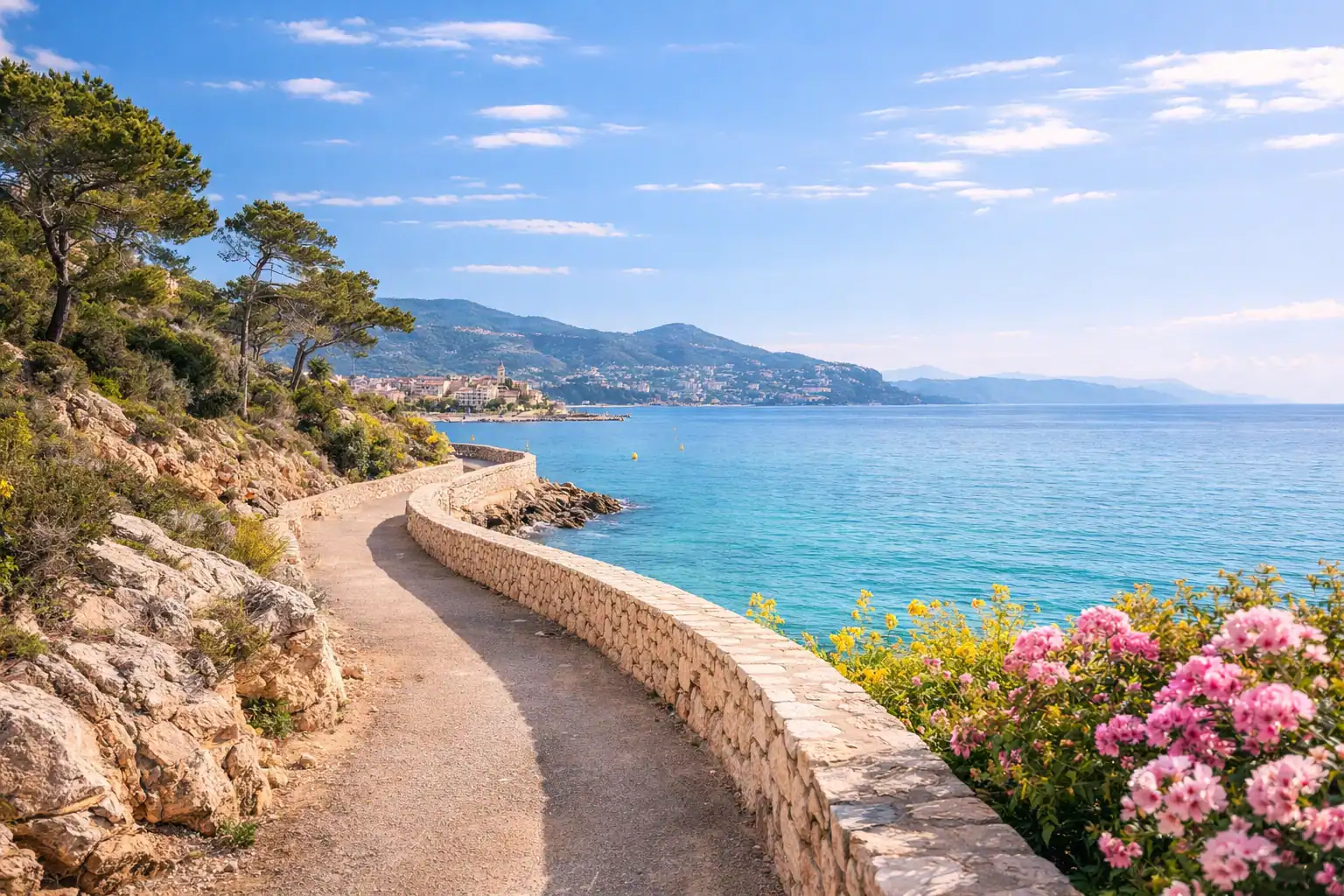
Many travelers plan Mediterranean trips around summer because that is when the region looks most obvious: hot beaches, long evenings, warm sea and full seasonal energy.
But the Mediterranean has another useful window before that.
From March to May, many coastal towns, islands and old cities begin to wake up again. The days grow longer. Terraces return slowly. Local life moves outside. The weather becomes easier for walking, but the heavy pressure of summer has not fully arrived.
That is the Mediterranean shoulder season. It is not peak summer, and it is not deep off-season. It is the in-between period when travel can feel calmer, lighter and more flexible.
Mediterranean Shoulder Season from March to May
In this guide, Mediterranean shoulder season means the spring window from March to May.
The term can also be used for autumn in many destinations, but spring has its own feeling. It is the season of reopening, softer light, green hills, coastal walks, lighter clothing, cooler evenings and towns that are becoming lively again without feeling completely taken over.
This is the important part: shoulder season is not perfect weather with no compromises.
It can bring mild days and beautiful light. It can also bring wind, cooler nights, fresh sea water, occasional rain and some places that are not fully open yet. The reward is not guaranteed beach weather. The reward is space.
You get more room to walk, sit, change plans and notice the place.
What Shoulder Season Really Means
Shoulder season sits between peak season and low season.
In the Mediterranean, peak season usually means the strongest summer travel months, when beaches, hotels, ferries, restaurants and famous towns are at their busiest. Low season is the quieter winter period, when some coastal places slow down and island services may be reduced.
Shoulder season is the middle ground.
There is more life than winter, but less pressure than summer. You can often find open cafés, walkable streets, mild afternoons and a more relaxed pace. At the same time, you may still need to check ferry schedules, opening times and weather more carefully than you would in July.
That is what makes the season useful. It gives you enough of the Mediterranean feeling without asking you to accept the full summer crowd.
March: Quiet, Fresh and Still Early
March is the earliest part of spring shoulder season.
It can be beautiful, but it is not the safest month if you want beach weather. The sea is usually still cold, evenings can feel fresh, and some island or coastal services may still be limited.
March works best for travelers who want quiet streets, old towns, coastal walks, local cafés and a first sense of spring. It is a good month for cities, historic centers, food markets and places where the trip does not depend on swimming.
You may get sunny afternoons that feel almost warm. You may also need a jacket. That mix is normal.
March is best if you want calm more than warmth.
April: The Season Starts to Open
April is when shoulder season becomes more visible.
Flowers appear in many coastal areas. Days feel longer. Outdoor tables become more common. Spring light changes the mood of old towns and harbor walks. Many destinations begin to feel awake again.
April is still not full beach season, but it is often a very good month for walking, city breaks, gardens, scenic routes, small towns and coastal paths. The temperature is usually easier for moving around than in summer, especially in places with hills, stone streets or limited shade.
It is also a month when plans need a little flexibility. One day may feel warm and bright; another may be windy or cooler. That does not ruin a shoulder season trip if you have not built the whole plan around the beach.
April suits travelers who like being outside, but do not need summer intensity.
May: Close to Summer, but Not Quite Summer
May is the strongest spring shoulder-season month for many Mediterranean trips.
The days are longer, outdoor life feels more natural, and many coastal destinations begin to feel ready for visitors. Restaurants, cafés, ferries and beach areas are more active than in early spring.
But May can still surprise people.
A beach can look like summer while the water still feels fresh. A sunny afternoon can feel warm, then the evening asks for a layer. A famous town may feel easy during the week but much busier on a late-spring weekend.
May is best when you treat it as near-summer, not guaranteed summer.
It is a good month for travelers who want the coast, light, walking, terrace meals, possible swims and fewer crowds than peak summer. If warm swimming is the main purpose of the trip, you still need to choose carefully.
For water expectations, Mediterranean sea temperature by month is useful because the sea warms more slowly than the air.
Why Shoulder Season Feels Different
The biggest difference is not only weather. It is how the day moves.
In summer, the day often has to be managed around heat, crowds and reservations. You may need early starts, midday shade, booked dinners, beach parking plans and patience in narrow streets.
In shoulder season, the day usually has more space inside it.
You can walk later in the morning. You can sit in the sun instead of hiding from it. You can change direction because a street looks interesting. You can stay longer in a market, stop at a café, return to the same harbor in the evening and not feel that the whole trip is being pushed by peak-season pressure.
That freedom is the real value of shoulder season.
It makes travel feel less like a schedule and more like a place.
What You Gain
You usually gain easier movement.
Old towns are more comfortable to walk through. Historic sites feel less punishing in mild weather. Coastal paths are more enjoyable before the strongest heat. Markets and cafés feel active without always feeling crowded.
You may also gain better value. Accommodation and flights can sometimes be easier to manage before summer demand rises, though popular destinations can still be expensive during holidays and weekends.
You also gain a different kind of atmosphere. The Mediterranean in spring is not only about beaches. It is about shutters opening, streets filling slowly, flowers near old walls, fishermen preparing boats, and people returning to outdoor life after winter.
That version of the region is quieter, but not empty.
For many travelers, it feels more personal.
What You Do Not Always Get
You do not always get warm sea.
That is the first expectation to control. March and April are usually not swimming months for most travelers. May can bring the first good swims in warmer places, but it is still not the same as July or August.
You also do not always get full summer services. Some beach clubs, ferry routes, seasonal restaurants or small island businesses may still be limited early in the season.
Evening life can be quieter too. If you want busy promenades, late beach bars and the full summer atmosphere, shoulder season may feel too calm.
This is not a failure of the season. It is the trade-off.
Shoulder season gives you space, mildness and flexibility. It does not always give you the full summer machine.
Best Trips for Mediterranean Shoulder Season
Shoulder season works especially well for trips where walking and atmosphere matter.
City breaks are strong in this period. Places like Athens, Palermo, Valencia, Nice, Málaga, Cagliari, Lisbon or Dubrovnik can be much easier to explore before high summer heat and crowds take over.
Coastal towns also work well if you want harbor walks, old streets, outdoor cafés and short escapes rather than a full beach holiday.
Islands can be excellent too, but they need more checking. Larger islands with year-round life are easier in spring than tiny places that depend heavily on summer tourism.
This is a good season for:
- old towns
- coastal walks
- food markets
- scenic train or bus routes
- small harbors
- spring flowers and countryside
- archaeological sites
- café terraces
- short city breaks by the sea
It is less ideal if the entire trip depends on hot sand and warm water.
Shoulder Season vs Summer
Shoulder season is not simply a quieter version of summer.
It is a different kind of trip.
Summer is better if you want warm water, full beach days, long hot evenings and the complete Mediterranean holiday atmosphere.
Shoulder season is better if you want walking comfort, flexibility, less heat, more room and a slower experience.
This is where spring vs summer Mediterranean travel becomes useful. That comparison is not about proving one season is better. It shows how the same destination can feel different depending on whether you arrive in a breathable season or a peak-summer season.
The important question is not “Which season is best?”
The important question is “What kind of trip do I want?”
Why Shoulder Season Is Becoming More Important
Shoulder season matters more now because summer travel is becoming harder in many places.
Heat, crowding, higher prices and pressure on popular destinations can change the way people plan Mediterranean trips. A summer trip can still be wonderful, but it often requires more timing, more reservations and more patience.
Spring gives another option.
It lets travelers experience the region without needing every day to be built around heat and peak demand. It also spreads travel beyond the most crowded weeks of the year, which can make the trip feel easier for visitors and less intense for places that receive heavy summer tourism.
A broader European view of tourism and climate adaptation shows why weather, heat and seasonal choice are becoming more important in travel planning, especially in southern Europe.
For a traveler, the simple version is clear: spring can give you a more manageable Mediterranean trip.
How to Plan a Shoulder Season Trip
Plan for layers, not extremes.
For a broader spring planning angle, a Mediterranean spring travel guide can help you choose destinations for walking, old towns, coastal light, food and flexible days without planning the trip as if it were already peak summer.
Bring clothes that work for warm afternoons and cooler evenings. A light jacket, comfortable shoes and something for wind near the sea can make the trip much easier.
Check opening times. Do not assume every ferry, beach restaurant or small island service is operating on a summer schedule in March or April.
Choose your base carefully. In shoulder season, it often helps to stay somewhere with real local life, not only a resort area that wakes fully in summer.
Keep the plan flexible. If one day is windy, use it for an old town, market or museum. If the weather is warm, spend more time on the coast. The best shoulder season trips leave room for the day to decide a little.
Most of all, do not overpack the itinerary. The season works best when you have time to notice it.
Who Shoulder Season Is Best For
Mediterranean shoulder season is best for travelers who like walking, local rhythm and easier days.
It suits you if you want to explore old towns, sit in cafés, use public spaces, walk along the water, visit markets and enjoy the region before it feels fully crowded.
It suits you if you do not need the sea to be warm every day.
It suits you if you prefer mild weather to heat.
It suits you if you want a trip that feels less pressured.
It is less ideal if you want guaranteed beach weather, late-night summer energy, full resort services or very warm swimming.
That does not make shoulder season better or worse. It makes it specific.
Final Thought
Mediterranean shoulder season is not a secret trick for getting summer without summer.
It is its own kind of travel.
From March to May, the region feels lighter, cooler, greener and more open. Streets are easier to walk. Terraces begin to return. Coastal towns feel awake, but not fully overwhelmed. The sea may still be fresh, and not everything will run at peak-season speed, but the trip can feel more breathable.
That is the reason to choose it.
Not because it gives you everything summer gives you.
Because it gives you something summer often takes away: space.